
What's Happening?
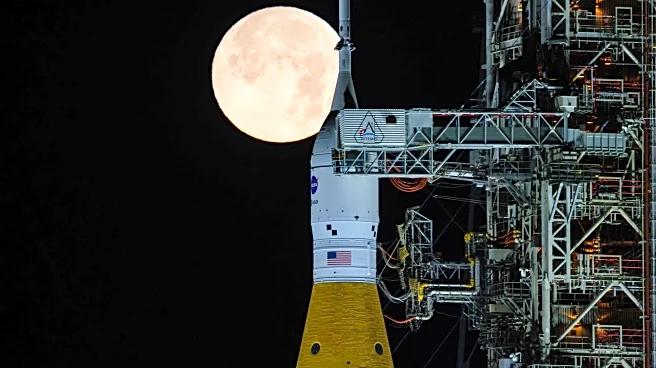
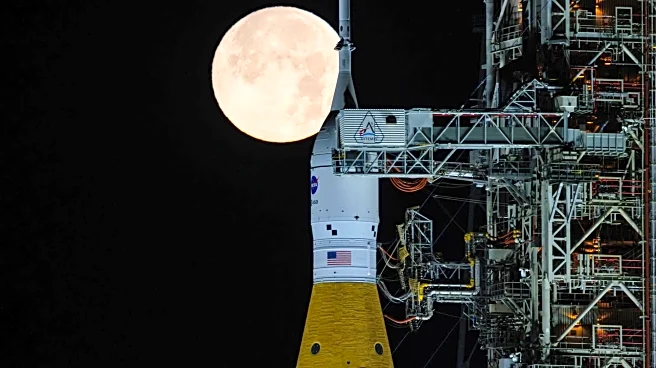
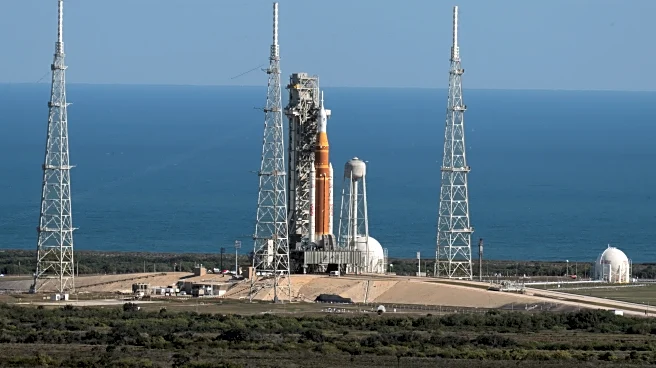
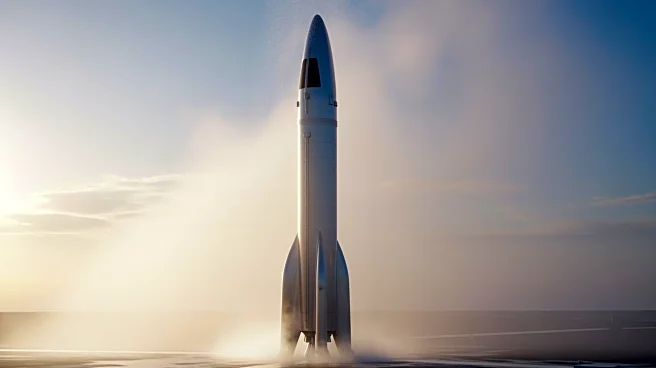
NASA has successfully completed a wet dress rehearsal for the Artemis II test flight, a critical prelaunch procedure involving the loading of cryogenic propellant into the Space Launch System (SLS) tanks.
This rehearsal took place at Launch Pad 39B at NASA's Kennedy Space Center in Florida. The process included sending a team to the launch pad to finalize the Orion spacecraft and safely draining the rocket. The wet dress rehearsal is designed to identify and resolve any potential issues before the actual launch attempt. Following the successful completion of this test, NASA has set March as the earliest possible launch window for the Artemis II mission, allowing time for data review and a second rehearsal if necessary.
Why It's Important?
The successful completion of the wet dress rehearsal is a significant milestone for NASA's Artemis II mission, which aims to further human exploration of the Moon. This mission is part of NASA's broader Artemis program, which seeks to establish a sustainable human presence on the Moon by the end of the decade. The Artemis II mission will be the first crewed flight test of the SLS and Orion spacecraft, marking a critical step towards future lunar missions. The success of this mission could have far-reaching implications for U.S. leadership in space exploration, potentially opening new opportunities for scientific research and international collaboration.
What's Next?
NASA plans to conduct a second wet dress rehearsal to ensure all systems are functioning correctly before the Artemis II launch. The agency will review data from the initial rehearsal to address any issues that may arise. If all goes according to plan, the Artemis II mission could launch as early as March. This mission will pave the way for Artemis III, which aims to land astronauts on the lunar surface. Stakeholders, including international partners and commercial space companies, will be closely monitoring the progress of the Artemis II mission as it could influence future collaborations and investments in lunar exploration.