

What's Happening?
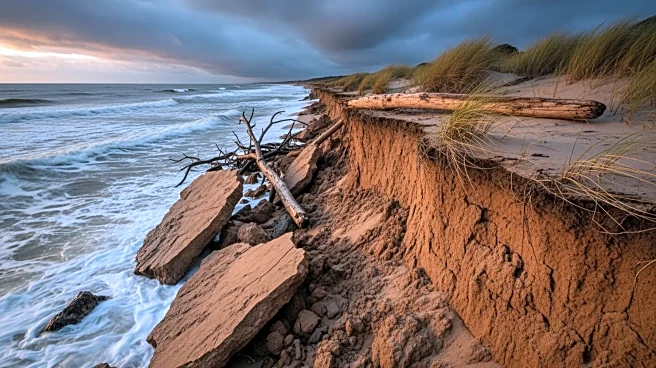
Residents in Thorpeness, Suffolk, are facing the imminent threat of losing their homes due to severe coastal erosion. Hilary Lightfoot, a long-time resident, has already lost a quarter of her garden and fears her entire building may soon be demolished.
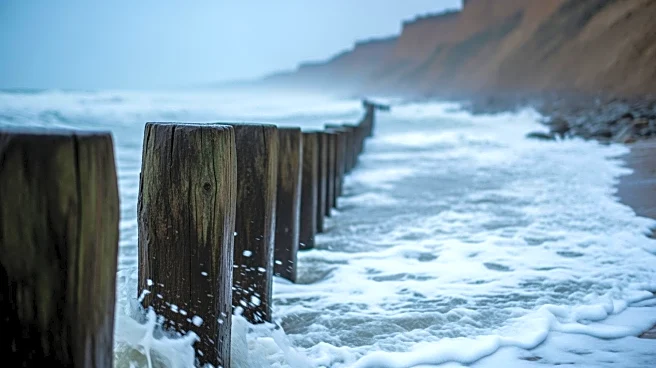
The erosion has been a persistent issue in the area, with four homes already demolished this winter. The situation is mirrored in Hemsby, Norfolk, where significant erosion has also occurred. Local authorities warn that hundreds of homes could be lost in the coming decades. The erosion is attributed to the region's soft geology, which is easily worn away by the sea. Despite government funding for flood and erosion management, residents like Hilary feel helpless as their homes and communities face destruction.
Why It's Important?
The erosion in Thorpeness and surrounding areas highlights the broader challenges of managing coastal environments in the face of natural and potentially climate-related changes. The loss of homes not only affects individual property owners but also threatens the cultural and economic fabric of these communities. The situation underscores the need for comprehensive coastal management strategies that balance environmental preservation with the protection of human settlements. The financial and emotional toll on residents is significant, as many face the prospect of displacement without adequate compensation or relocation support.
What's Next?
Local councils and the government are under pressure to address the erosion crisis more effectively. Discussions about future funding and management strategies are likely to focus on the cultural and economic value of at-risk areas. There is a call for a multi-government approach to ensure sustainable coastal management that considers both environmental and human needs. Residents are advocating for more immediate and substantial support to protect their homes and communities.
Beyond the Headlines
The erosion issue in Thorpeness raises questions about the long-term sustainability of coastal living in vulnerable areas. It also highlights the complexities of balancing natural processes with human habitation. The situation may prompt broader discussions about land use planning, insurance policies, and the role of government in mitigating the impacts of natural disasters. As climate change continues to influence weather patterns and sea levels, similar challenges may arise in other coastal regions.