
What's Happening?
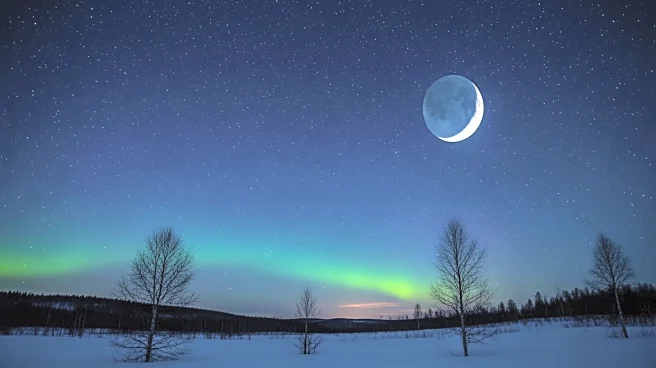
The winter solstice, occurring on December 21, marks the longest night of the year for the Northern Hemisphere. This astronomical event is characterized by the sun reaching its most southerly point in the sky,
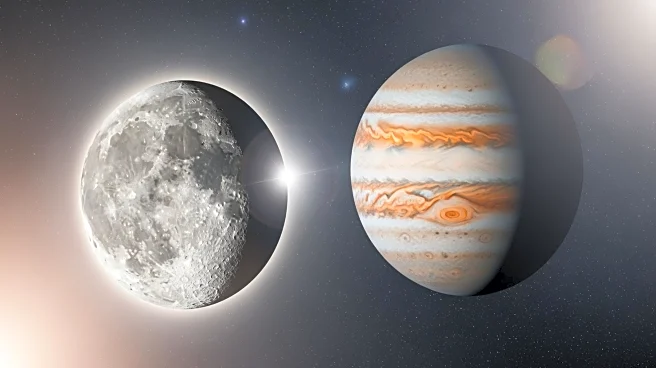
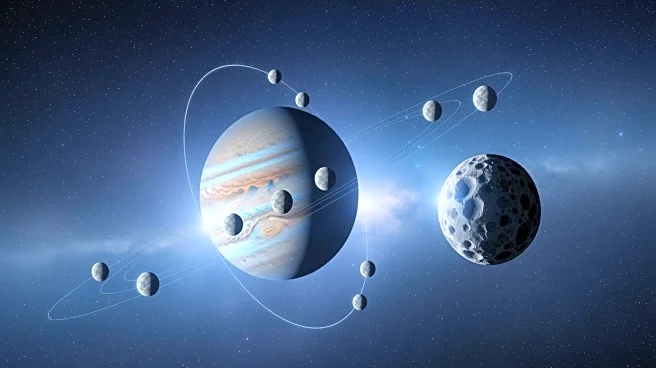
resulting in extended nighttime hours. In Washington D.C., for instance, there will be 14 hours and 33 minutes of darkness around this time. The solstice also heralds a series of celestial events, including three full moons and a total lunar eclipse visible across the United States. The full moons are scheduled for January 3, February 1, and March 3, with the March full moon featuring a total lunar eclipse. Additionally, bright planets such as Jupiter and Venus will be prominent in the night sky, with Jupiter reaching opposition on January 9, making it visible from sunset to sunrise.
Why It's Important?
The winter solstice and the accompanying celestial events offer significant opportunities for astronomical observation and public engagement with science. The visibility of bright planets and the lunar eclipse can inspire interest in astronomy and provide educational opportunities for schools and science enthusiasts. These events also have cultural significance, as they have been celebrated in various traditions as symbols of renewal and the gradual return of longer days. The solstice marks a turning point in the seasonal cycle, influencing agricultural practices and cultural festivals. For the scientific community, these events provide data collection opportunities and public outreach potential, fostering a greater appreciation for the natural world.
What's Next?
Following the winter solstice, the days will gradually lengthen, leading up to the vernal equinox in March. Astronomers and sky watchers will continue to monitor the night sky for the upcoming full moons and the total lunar eclipse. The eclipse, occurring on March 3, will be partially visible across the United States, with the best views in the western regions. As Jupiter and Venus become more prominent, they will offer additional opportunities for observation and study. Educational institutions and observatories may organize events to engage the public in these celestial phenomena, promoting science literacy and community involvement.