






What's Happening?
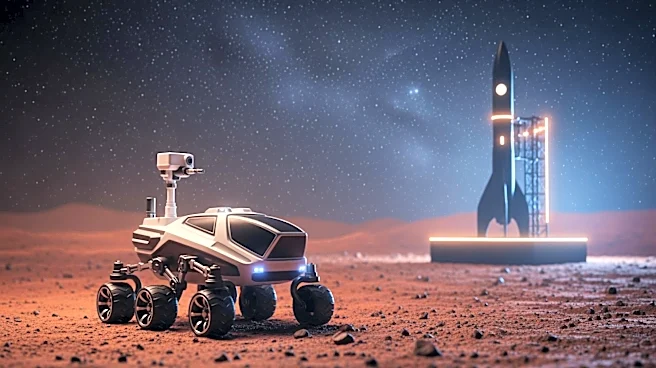
NASA has confirmed that SpaceX will launch the European Space Agency's Rosalind Franklin Mars rover on a Falcon Heavy rocket from Kennedy Space Center, Florida, potentially as soon as late 2028. This decision follows a complex history of delays and changes
in plans due to political and technical challenges, including Russia's invasion of Ukraine. Originally part of a joint initiative with NASA, the European rover's mission has faced numerous setbacks, including the withdrawal of NASA's support in 2012 due to budget constraints. The mission, now part of the ExoMars program, aims to search for signs of past life on Mars, with the rover equipped to drill into the Martian surface.
Why It's Important?
The launch of the Rosalind Franklin rover marks a significant milestone in international space collaboration and the search for extraterrestrial life. The mission's success could enhance our understanding of Mars and potentially pave the way for future human exploration. The involvement of SpaceX highlights the growing role of commercial space companies in international missions, potentially reducing costs and increasing the frequency of such missions. This collaboration also underscores the importance of international partnerships in overcoming political and financial hurdles in space exploration.
What's Next?
With the launch scheduled for 2028, preparations will focus on finalizing the rover's design and ensuring all systems are ready for the mission. The success of this mission could lead to further collaborations between NASA, ESA, and commercial partners like SpaceX, potentially accelerating the timeline for future Mars exploration missions. The mission's progress will be closely watched by the scientific community and space enthusiasts worldwide.