


What's Happening?
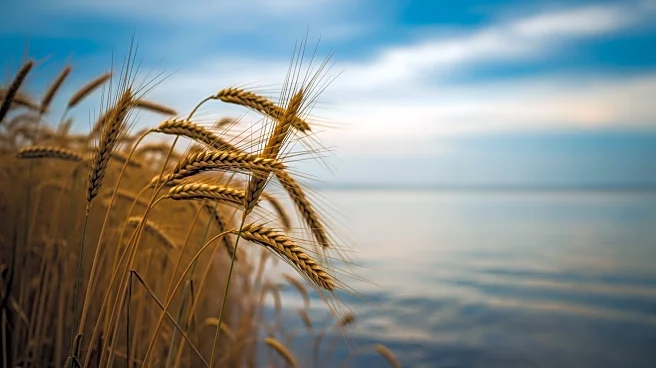
Wheat futures have fallen to a six-week low as discussions between U.S. and Ukrainian officials in Berlin show progress towards a potential ceasefire in the Black Sea region. This development comes amidst ongoing hostilities between Russia and Ukraine,
which began in February 2022. Recent attacks in the Black Sea, including a Ukrainian drone strike on a Russian submarine and a Russian attack on a Turkish grain-shipping vessel, have heightened tensions. Ukrainian President Volodymyr Zelensky has emphasized the need for guarantees and monitoring by external countries for any ceasefire agreement. Additionally, global wheat production forecasts have increased, with the USDA predicting a world output of 837.81 million metric tons, a 1.1% rise from the previous month. Canadian wheat production is also expected to increase significantly. As a result, wheat futures for March delivery have decreased on the Chicago Board of Trade.
Why It's Important?
The decline in wheat futures is significant as it reflects the potential easing of geopolitical tensions in a critical grain-exporting region, which could stabilize global wheat supply chains. The Black Sea is a vital corridor for grain exports, and a ceasefire could facilitate smoother trade operations, benefiting global food security. The increase in global wheat production forecasts, particularly from Canada, suggests a potential alleviation of supply constraints, which could lead to lower prices and reduced inflationary pressures on food products. This development is crucial for countries reliant on wheat imports, as it may lead to more stable and affordable food prices. However, the situation remains delicate, and any disruption in the ceasefire talks could reverse these trends.
What's Next?
If the ceasefire talks continue to progress, there could be a formal agreement that includes international monitoring and enforcement mechanisms. This would likely lead to a more stable geopolitical environment in the Black Sea region, encouraging further investment and trade in the area. The agricultural markets will closely watch these developments, as any setbacks could lead to renewed volatility in wheat prices. Additionally, stakeholders in the global food supply chain will be monitoring the situation to adjust their strategies accordingly. The outcome of these talks could also influence future diplomatic engagements between the involved countries and their allies.