






What's Happening?
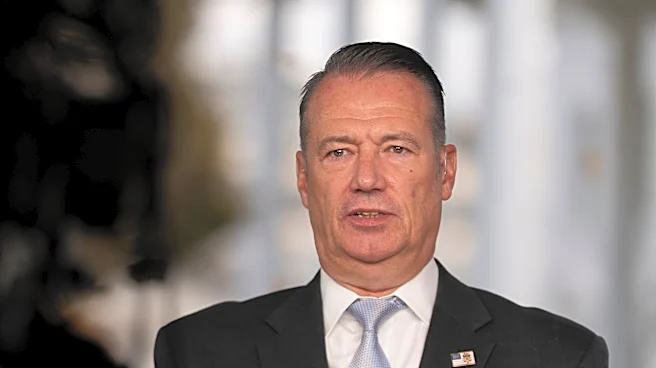
Michael Banks, the head of the U.S. Border Patrol, announced his resignation during a Fox News interview, a move later confirmed by the Department of Homeland Security. Banks' departure marks the latest in a series of leadership changes within the DHS,
which oversees the Border Patrol and U.S. Immigration and Customs Enforcement (ICE). Banks, who has been with the agency for 37 years, cited personal reasons for his resignation, stating it was time to 'enjoy the family and life.' His tenure saw the Border Patrol involved in high-profile immigration enforcement operations, particularly in cities governed by Democrats, which led to increased arrests and controversy. Banks' resignation coincides with a leadership transition at ICE, where acting director Todd Lyons is set to be replaced by David Venturella.
Why It's Important?
The resignation of Michael Banks comes at a critical time for U.S. immigration policy, as the Trump administration recalibrates its approach to border security. Banks played a key role in implementing President Trump's immigration crackdown, which has been a contentious issue in American politics. His departure could signal a shift in strategy or priorities within the DHS, potentially affecting how immigration laws are enforced. The leadership changes at both the Border Patrol and ICE may impact the agencies' operations and their relationship with the Biden administration, which has been critical of Trump's immigration policies. Stakeholders, including political leaders and immigrant advocacy groups, will be closely watching these developments for any changes in enforcement tactics or policy direction.
What's Next?
With Banks stepping down, the DHS will need to appoint a new head for the Border Patrol, a decision that could influence the agency's future direction. The transition at ICE, with David Venturella taking over as director, also suggests potential changes in leadership style and policy implementation. These appointments will be crucial as the DHS navigates ongoing challenges at the U.S. border, including managing illegal crossings and addressing humanitarian concerns. The Biden administration's response to these leadership changes will be pivotal in shaping the future of U.S. immigration policy and enforcement.