


What's Happening?
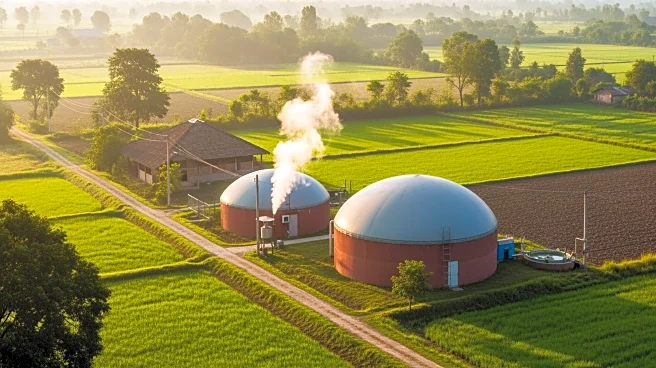
Jharkhand is advancing its clean energy initiatives through the expansion of gobar gas plants under the GOBARdhan scheme. This initiative, part of the Swachh Bharat Mission (Grameen) 2.0, aims to enhance village cleanliness, increase rural household income,
and generate energy and organic manure from cattle waste. Since its launch in April 2018, the scheme has established 44 gobar gas plants across 24 districts, benefiting 745 families. The program reduces dependency on firewood and LPG, improving public health by curbing smoke pollution. The state plans to set up ten more plants next fiscal year, further promoting environmental sanitation and reducing vector-borne diseases.
Why It's Important?
The GOBARdhan scheme is significant for its multifaceted impact on rural communities in Jharkhand. By converting cattle waste into biogas, the initiative not only provides a sustainable energy source but also enhances agricultural productivity through organic manure. This reduces the financial burden on rural households by decreasing LPG expenses and improving health outcomes by reducing smoke-related pollution. The scheme also addresses solid waste management, contributing to cleaner villages and better public health. As the program expands, it promises to further boost rural economies and promote environmental sustainability.
What's Next?
Jharkhand plans to establish ten additional gobar gas plants in the next financial year, expanding the reach and benefits of the GOBARdhan scheme. This expansion is expected to further reduce LPG dependency and enhance rural income. The initiative may also inspire similar programs in other states, promoting nationwide adoption of biogas technology. Continued success could lead to increased government support and investment, potentially transforming rural energy landscapes across India.