
What's Happening?
Australian authorities have reported the discovery of human remains in the southeast region of the country, where bushfires have been raging for several days. The remains were found near a vehicle in Seymour,
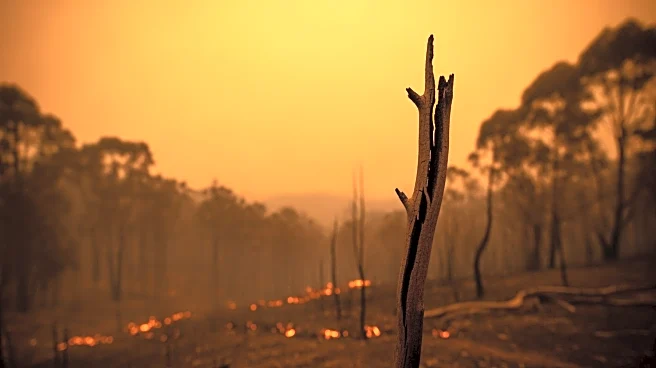
north of Melbourne. The fires, which have destroyed 300 buildings and claimed at least one life, have prompted a state of emergency declaration. Over 70 aircraft and thousands of firefighters have been deployed to combat the blaze, which has already consumed approximately 860,000 acres of bushland. The fires are the most severe since the 2019-2020 blazes that resulted in 33 fatalities. The current conditions, characterized by hot, dry, and windy weather, are expected to persist, potentially exacerbating the situation.
Why It's Important?
The ongoing bushfires in Victoria highlight the persistent threat of natural disasters exacerbated by climate conditions. The destruction of homes and infrastructure, along with the loss of life, underscores the urgent need for effective disaster management and climate adaptation strategies. The fires also pose significant challenges to emergency services and local communities, straining resources and necessitating substantial government intervention. The situation serves as a stark reminder of the broader implications of climate change, which can lead to more frequent and intense natural disasters, affecting both human and ecological systems.
What's Next?
Authorities continue to monitor the situation closely, with updates available on the VicEmergency website. The focus remains on containing the fires and preventing further loss of life and property. The government has announced a $19.5 million support package to assist affected communities, including farmers and those in need of emergency accommodation. As the fires persist, there is a heightened risk of further damage, particularly with forecasts of extreme heat in the coming days. The response will likely involve ongoing coordination between local, state, and federal agencies to manage the crisis effectively.