







What's Happening?
Bruce Blakeman, the Nassau County Executive, is maintaining his stance on the county's cooperation agreement with U.S. Immigration and Customs Enforcement (ICE), despite new sanctuary state laws signed by New York Governor Kathy Hochul. These laws, part
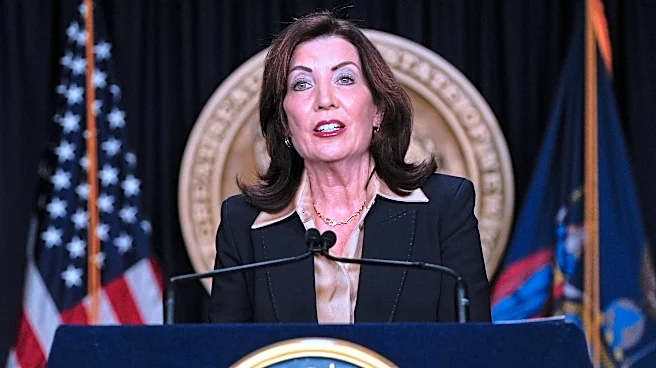
of a broader legislative package, aim to limit local law enforcement's cooperation with federal immigration authorities unless a judicial order is present. Blakeman has criticized the new measures, describing them as a 'disgrace' and a hindrance to crime-fighting efforts. He has vowed to challenge the laws in court, with support from sheriffs across the state. Governor Hochul, however, remains committed to the sanctuary laws, viewing them as a key part of her re-election campaign. The laws require Blakeman to terminate the county's agreement with ICE within 90 days, a move he opposes, citing the importance of the agreement in addressing criminal activities involving migrants.
Why It's Important?
The conflict between Blakeman and Hochul highlights the ongoing national debate over immigration enforcement and sanctuary policies. This legal showdown could set a precedent for how states and local governments navigate federal immigration laws. For Nassau County and similar jurisdictions, the outcome could impact their ability to collaborate with federal agencies on immigration matters. The sanctuary laws are part of a broader effort by Democratic lawmakers to protect undocumented immigrants from federal enforcement actions, reflecting a significant policy shift from previous administrations. The legal battle could influence public opinion and voter behavior, particularly in the context of upcoming elections, as immigration remains a polarizing issue in U.S. politics.
What's Next?
The next steps involve potential legal actions by Nassau County and other municipalities against the state of New York. The newly established Office of Immigrant Trust, under the New York Attorney General, will play a crucial role in determining the enforcement of these sanctuary laws. The legal proceedings could take months or even years, depending on the complexity of the cases and the appeals process. Political leaders and advocacy groups on both sides of the issue are likely to intensify their efforts to sway public opinion and influence the legal outcomes. The situation also poses a test for Governor Hochul's administration as it seeks to balance state policies with federal immigration laws.