

What's Happening?
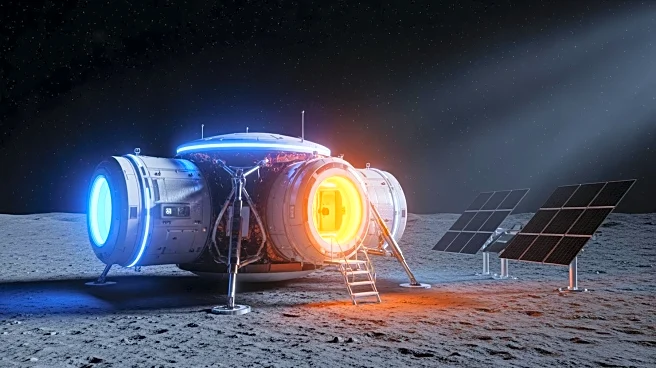
NASA and other spacefaring nations are advancing technologies to ensure sustainable energy solutions for future lunar bases. The focus is on developing thermal energy systems that can store solar energy during the lunar day and release it at night, as well
as utilizing nuclear reactors for continuous power supply. The use of lunar regolith as a thermal storage material is being explored, with various modification techniques such as compaction and sintering being tested to enhance its thermal properties. These efforts aim to address the energy challenges posed by the extreme temperature fluctuations on the Moon.
Why It's Important?
The development of reliable energy systems is crucial for the long-term habitation and industrialization of the Moon. By utilizing in situ resources like lunar regolith, these technologies can reduce the dependency on Earth-based supplies, making lunar bases more self-sufficient. The ability to store and manage energy efficiently will support scientific research, human habitation, and potential industrial activities on the Moon. This progress not only advances lunar exploration but also sets the stage for future missions to Mars and beyond, where similar energy challenges will be encountered.
What's Next?
Future research will focus on validating these technologies through ground-based experiments and small-scale lunar tests. The integration of multiple energy sources, including solar, nuclear, and thermal storage systems, will be crucial for creating a resilient energy infrastructure. As these technologies mature, they will enable the transition from short-term missions to permanent lunar bases, supporting continuous human presence and industrial activities on the Moon.
Beyond the Headlines
The development of lunar energy systems also has implications for Earth-based energy solutions. Techniques for improving thermal storage and energy efficiency could be adapted for use in terrestrial applications, contributing to advancements in renewable energy technologies. Additionally, the collaboration between international space agencies in developing these systems highlights the potential for global cooperation in addressing energy challenges both on Earth and in space.