



What's Happening?
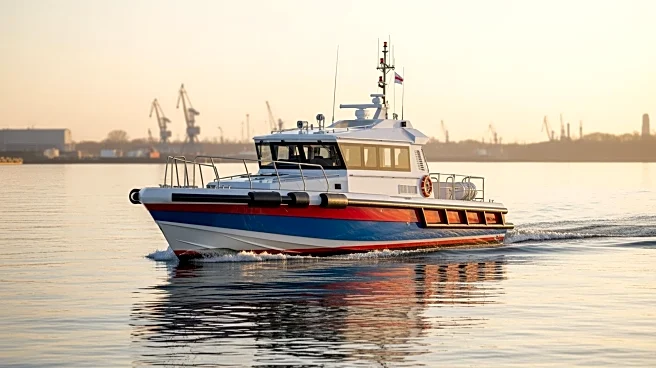
The Association of Maryland Pilots has received a new high-speed pilot boat from Gladding-Hearn Shipbuilding. This vessel, named FEDERAL HILL, is a sistership to a previous model delivered four years ago. It features an aluminum hull based on the Ray
Hunt Design deep-V, measuring 48.5 feet in length with a 15.6-foot beam and a 4-foot draft. Powered by twin Volvo Penta D13 diesel engines, the boat can reach speeds of up to 30 knots, making it faster than larger offshore pilot boats. Designed for harbor service, the vessel is equipped to handle extreme seasonal temperatures in Baltimore, with features such as heated decks, windows, and handrails, as well as a 40,000 BTU HVAC system. The boat also includes a powered J-Basket rescue system capable of recovering a pilot from the water in under 10 seconds, and a Humphree interceptor system for automatic trim optimization.
Why It's Important?
The delivery of this high-speed pilot boat is significant for the Maryland Pilots as it enhances their operational capabilities in the Baltimore harbor. The advanced features of the vessel, such as its speed and maneuverability, are crucial for efficient pilot operations, especially in challenging weather conditions. The ability to operate in extreme temperatures and icy conditions ensures that pilot services can be maintained year-round, which is vital for the continuous flow of maritime traffic. This development supports the local maritime industry by improving safety and efficiency in pilotage services, which are essential for the economic activities dependent on the port.
What's Next?
With the new pilot boat in operation, the Association of Maryland Pilots is expected to enhance their service delivery, potentially leading to increased efficiency in harbor operations. The vessel's advanced technology and design may set a new standard for pilot boats in the region, prompting other pilot associations to consider similar upgrades. The focus will likely be on monitoring the performance of the FEDERAL HILL in various conditions to assess its impact on operational efficiency and safety.