


What's Happening?
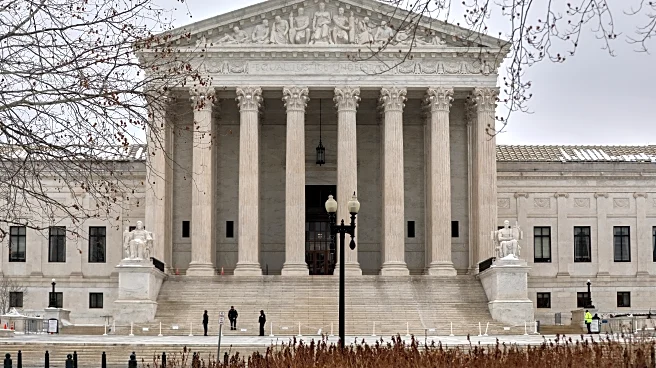
The Supreme Court is set to hear a significant case regarding President Trump's attempt to limit birthright citizenship through an executive order. The case, argued by Solicitor General D. John Sauer, challenges a long-standing interpretation of the 14th
Amendment, which grants citizenship to all persons born in the United States. Sauer, a key legal figure for President Trump, has previously secured victories on issues like presidential immunity. However, this case presents a formidable challenge, as it seeks to overturn over a century of legal precedent. The administration's argument hinges on redefining the phrase 'subject to the jurisdiction thereof' to exclude children of individuals who are in the U.S. illegally or on temporary visas.
Why It's Important?
This case could have profound implications for U.S. citizenship laws and the lives of many individuals born in the country. A ruling in favor of the executive order could introduce new complexities in proving citizenship for newborns, potentially affecting millions. It also raises questions about the balance of power between the executive branch and established constitutional interpretations. The outcome could set a precedent for future executive actions and their ability to alter fundamental rights. The case is a test of the judiciary's willingness to uphold or reinterpret long-standing legal doctrines under political pressure.
What's Next?
The Supreme Court's decision will be closely watched, as it could either affirm or challenge the current understanding of the 14th Amendment. If the court rules against the executive order, it would reinforce the traditional interpretation of birthright citizenship. However, a ruling in favor could lead to legislative and legal challenges, as well as potential changes in immigration and citizenship policies. The decision will likely influence future executive actions and the legal strategies employed by the administration.