
What's Happening?
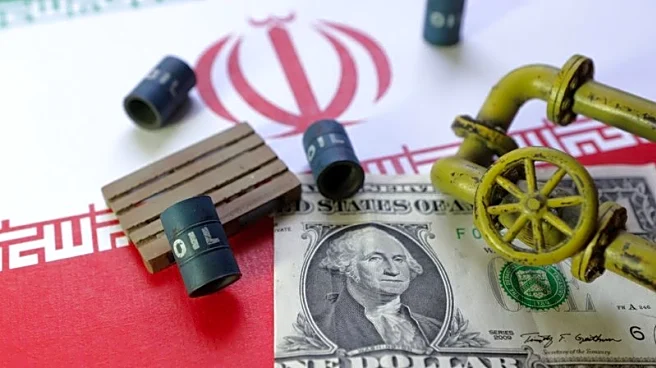
Gulf oil producers, particularly the UAE and Saudi Arabia, are increasing their oil exports in response to rising geopolitical tensions involving Iran. Abu Dhabi plans to export additional volumes of its Murban crude in April, with ADNOC offering extra
barrels to partners in its onshore concession. Saudi Arabia has also increased its production and exports, reaching 7.3 million barrels per day in February, the highest since April 2023. This move is part of a contingency plan to mitigate potential disruptions in oil supply through the Strait of Hormuz, should tensions escalate further. The geopolitical risk premium has driven oil prices above $72 per barrel, nearing the highest levels since July. OPEC+ is expected to consider a modest production increase in its upcoming meeting.
Why It's Important?
The actions of Gulf oil producers are significant as they aim to stabilize the global oil market amid potential disruptions due to U.S.-Iran tensions. By increasing exports, these producers are attempting to manage the geopolitical risk premium without causing a spike in oil prices that could lead to economic instability. This strategy reflects a balance between benefiting from higher oil prices and preventing excessive price increases that could harm global demand and trigger political backlash. The situation also highlights the strategic importance of spare capacity as a tool for market control, allowing producers to influence prices while maintaining supply security.
What's Next?
As tensions with Iran continue, the global oil market will closely watch the outcomes of the upcoming OPEC+ meeting, where production adjustments will be discussed. The potential for a U.S. strike on Iran remains a critical factor that could disrupt oil flows through the Strait of Hormuz, a vital chokepoint for global oil shipments. Gulf producers may continue to adjust their export strategies to preemptively address any supply disruptions. Additionally, shifts in global crude flows, such as increased Saudi exports to India and China's purchase of discounted Russian crude, will be monitored for their impact on market dynamics.