
What's Happening?
Top American and Iranian officials have arrived in Pakistan to initiate peace talks aimed at converting a two-week ceasefire into a lasting peace agreement. The U.S. delegation, led by Vice President JD
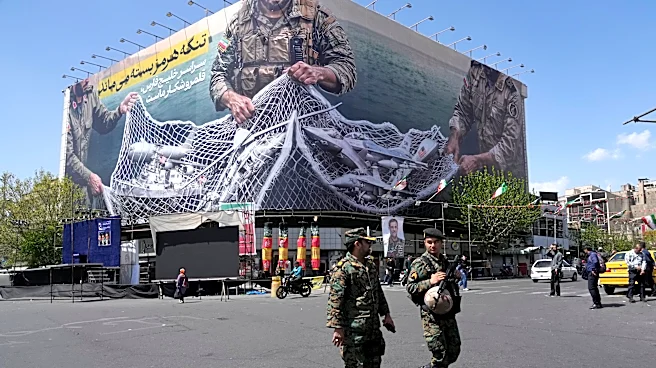
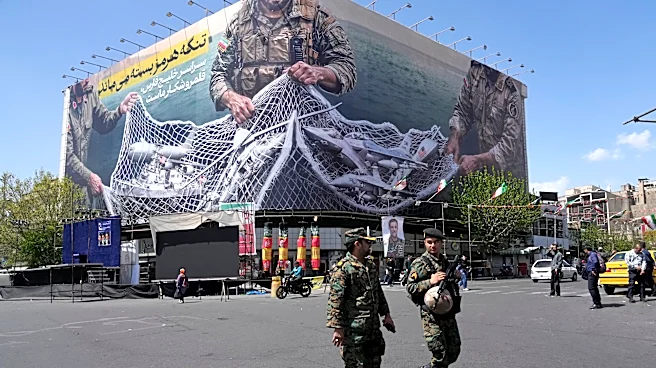
Vance, and the Iranian delegation, led by Parliament Speaker Mohammad Bagher Qalibaf, are meeting in Islamabad. The talks come amid a fragile ceasefire, with ongoing tensions as Israel continues strikes in southern Lebanon. The conflict has resulted in significant casualties, with over 3,000 deaths in Iran and nearly 2,000 in Lebanon. The war has disrupted the Persian Gulf's connection to the global economy, causing energy prices to soar. Both sides have expressed skepticism about the talks, with Iranian officials demanding a ceasefire in Lebanon and the release of blocked Iranian assets as preconditions for further discussions.
Why It's Important?
The peace talks are crucial as they aim to stabilize a region that has been severely affected by ongoing conflict, impacting global energy markets and regional stability. The closure of the Strait of Hormuz by Iran has been a significant strategic move, affecting the global oil supply and contributing to rising energy prices. Successful negotiations could lead to the reopening of this critical passage, easing global economic pressures. However, the deep-seated distrust between the U.S. and Iran, along with Israel's continued military actions, poses significant challenges to achieving a lasting peace. The outcome of these talks could have far-reaching implications for international relations and economic stability in the region.
What's Next?
Negotiations between Israel and Lebanon are set to begin in Washington, focusing on disarming Hezbollah, a key issue for Israel. The success of these talks could influence the broader peace process. Meanwhile, the U.S. and Iran must navigate their deep-seated distrust and conflicting demands to reach a viable agreement. The potential reopening of the Strait of Hormuz remains a critical point of negotiation, with Iran proposing to charge ships passing through, a proposal widely rejected by other nations. The international community will be closely monitoring these developments, as the outcomes could significantly impact global energy markets and regional stability.