




What's Happening?
The CIA has discontinued its World Factbook, a comprehensive reference manual that has been a staple for educational and research purposes since its public release in 1975. The Factbook, which provided detailed information on countries, their governments,
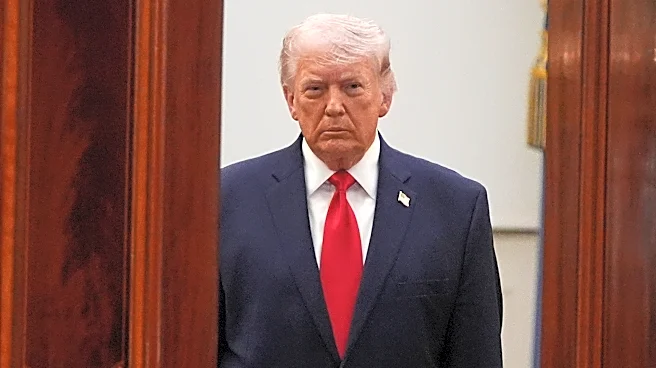
economies, and cultures, was initially created as a tool for intelligence gathering. Over the years, it became a widely used public resource, available online for free. The decision to shut down the Factbook was made by the Trump administration on February 4, citing a shift in the agency's core mission. This move has sparked a wave of disappointment among educators and researchers who relied on the Factbook for its comprehensive and accessible data.
Why It's Important?
The closure of the CIA World Factbook marks the end of an era for a resource that has been instrumental in education and research. Its absence leaves a gap in easily accessible, reliable information about global affairs, which could impact students, educators, and researchers who used it for various projects and studies. The Factbook's discontinuation also raises concerns about the availability of unbiased information, as it was one of the few government-produced resources that offered a broad overview of global data. The decision reflects broader trends in the dissemination of information and the challenges of maintaining public trust in government-provided data.
What's Next?
With the Factbook no longer available, educators and researchers will need to seek alternative sources for reliable global data. This may involve turning to university libraries or other online databases, which could be less accessible or require subscriptions. The shift may also prompt discussions about the role of government agencies in providing public information and the importance of maintaining transparency and accessibility in data sharing. Additionally, there may be efforts to archive the existing Factbook data for future reference, preserving it as a historical document.
Beyond the Headlines
The discontinuation of the World Factbook highlights the evolving nature of information dissemination in the digital age. As reliance on digital resources grows, the need for accurate and unbiased information becomes more critical. The Factbook's closure may also reflect broader geopolitical shifts and the changing priorities of intelligence agencies. It underscores the importance of critical thinking and media literacy in navigating the vast and often unreliable information landscape of the internet.