








What's Happening?
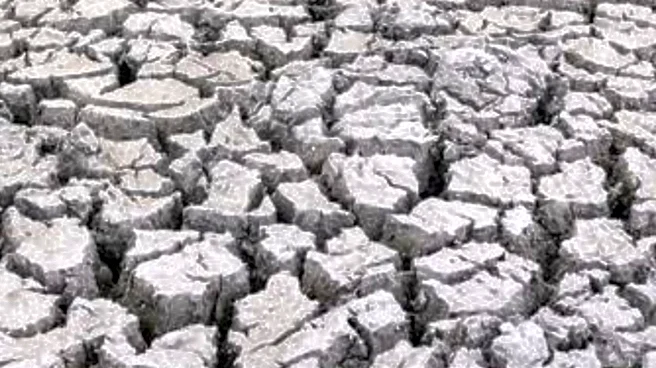
The United States Department of Agriculture (USDA) has officially designated 49 counties in Mississippi as natural disaster areas due to severe drought conditions. This designation, triggered by drought intensity values of D2 (Severe) for eight or more
consecutive weeks, or D3 (Extreme) or D4 (Exceptional) during the growing season, allows the USDA Farm Service Agency (FSA) to provide emergency credit to agricultural producers. The impacted area extends beyond Mississippi to include contiguous counties in Alabama, Arkansas, Louisiana, and Tennessee. Emergency loans are available to help producers recover from losses, including replacing essential items like equipment or livestock, reorganizing farming operations, or refinancing certain debts. The FSA will assess loan applications based on the extent of losses, available security, and repayment ability. The application deadline for these emergency loans is June 21, 2027.
Why It's Important?
This designation is crucial for the agricultural sector in the affected states, providing a vital financial lifeline to farmers grappling with the economic fallout of prolonged drought. Without such assistance, many producers could face significant financial hardship, potentially leading to farm closures, reduced agricultural output, and broader economic instability in rural communities. The emergency loans enable farmers to maintain their operations, ensuring continued food production and supporting the agricultural supply chain. The ability to replace lost livestock or equipment and refinance debts helps mitigate the immediate financial strain, allowing farmers to focus on recovery and future planning. This support also helps preserve the long-term viability of farming in these regions, which is essential for regional economies and national food security.
What's Next?
Agricultural producers in the designated primary and contiguous counties now have until June 21, 2027, to apply for emergency loans through the USDA Farm Service Agency. Farmers are encouraged to contact their local USDA Service Center to file a Notice of Loss and inquire about available programs. The USDA also provides resources such as the Disaster Assistance Discovery Tool, a Disaster Assistance-at-a-Glance fact sheet, and a Loan Assistance Tool on farmers.gov to help producers determine their eligibility and explore program options. The FSA will review each loan application individually, considering the specific losses incurred, the security offered, and the applicant's ability to repay the loan. The focus will be on facilitating recovery and ensuring the continuity of farming operations in the drought-stricken areas.
Beyond the Headlines
The recurring need for natural disaster designations due to drought highlights the increasing vulnerability of U.S. agriculture to climate variability and extreme weather events. While emergency loans provide immediate relief, they also underscore the broader challenge of building long-term resilience in farming practices. This situation prompts a deeper consideration of sustainable agricultural methods, water conservation strategies, and crop diversification to better withstand future climatic shocks. The financial burden on the federal government for disaster relief also raises questions about proactive measures and investments in climate adaptation for the agricultural sector. The long application window suggests a recognition of the complex and prolonged recovery process for agricultural communities, emphasizing the need for sustained support beyond immediate crisis response.