


What's Happening?
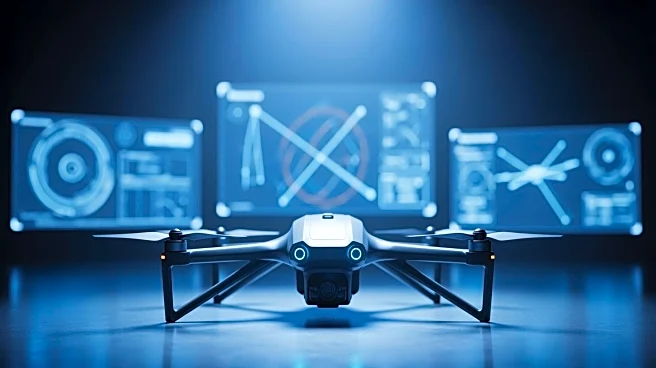
MVRsimulation has introduced a new team version of its first-person view (FPV) unmanned aerial vehicle (UAV) simulator at the 2025 Interservice/Industry Training, Simulation, and Education Conference (I/ITSEC 25) in Orlando. This advanced system builds
on the existing FPV UAV simulator, which was launched at I/ITSEC 24, and is designed to train operators in the use of agile quadcopter attack UAVs in contested environments. The system includes a gaming laptop running MVR's Virtual Reality Scene Generator (VRSG) and a Republic of Gamers (ROG) handheld controller, providing a realistic simulation of UAV operations. The VRSG engine offers geospecific simulation with game-quality graphics and can simulate hostile electronic environments and video stream degradation over distance. The new FPV Team Trainer allows for networked training, enabling multiple users to engage in complex mission tactics together, overseen by an Instructor Operator Station (IOS).
Why It's Important?
The introduction of the FPV UAV Team Trainer is significant for military training and defense readiness. By enabling networked training, this system allows for more comprehensive preparation for real-world scenarios where coordination and teamwork are crucial. The ability to simulate complex mission tactics in a shared virtual environment enhances the training experience, potentially leading to improved operational effectiveness in actual combat situations. This development reflects a broader trend in military training towards using advanced simulation technologies to prepare personnel for modern warfare challenges, where UAVs play an increasingly critical role.
What's Next?
The deployment of the FPV UAV Team Trainer could lead to its adoption by various military branches seeking to enhance their UAV training programs. As the system gains traction, it may prompt further innovations in simulation technology, potentially influencing how military training is conducted. Stakeholders, including defense contractors and military training institutions, may explore additional applications of this technology, such as integrating it with other simulation systems or expanding its use to different types of UAVs and mission scenarios.