









What's Happening?
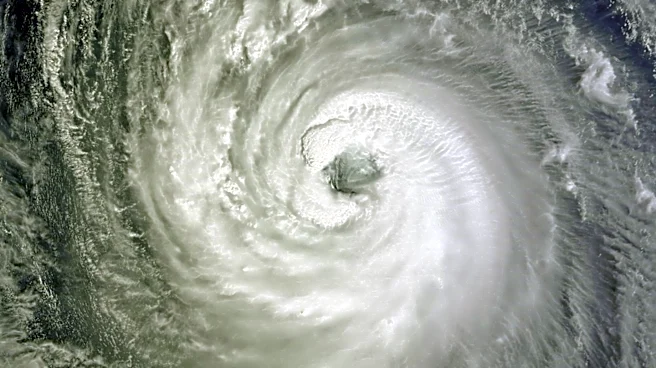
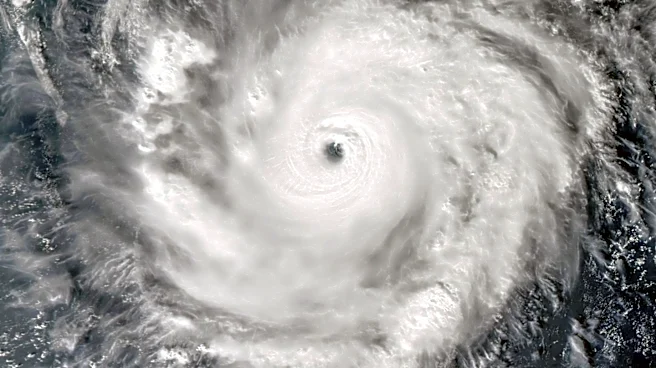
Typhoon Bavi, the most powerful storm to hit mainland China this year, has led to the evacuation of over 2.8 million people as it brought heavy rains and strong winds to the eastern coast. The storm, which weakened to a tropical storm by Sunday morning,
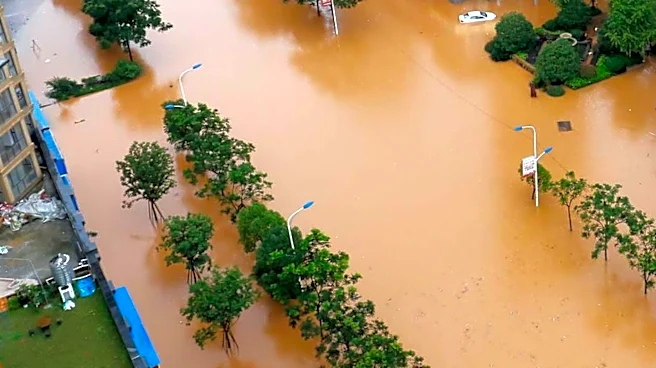
made landfall in Zhejiang province, affecting cities like Yuhuan and Yueqing. Despite the storm's weakening, it continues to pose a threat with prolonged and widespread rain expected across eastern and northern China. The evacuations were primarily concentrated in Zhejiang, with over 2.2 million people relocated. The storm has caused significant damage, including fallen trees and flooding, but no deaths or injuries have been reported.
Why It's Important?
The evacuation of millions highlights the severe impact of Typhoon Bavi on China's densely populated eastern regions. Zhejiang province, a major economic hub, faces disruptions that could affect local industries and the broader economy. The storm's impact on infrastructure, such as roads and buildings, could lead to significant repair costs and economic losses. Additionally, the storm tests China's emergency response capabilities and resilience to extreme weather events, which are becoming more frequent due to climate change. The situation underscores the need for robust disaster preparedness and infrastructure resilience in vulnerable regions.
What's Next?
As Typhoon Bavi continues to move inland, authorities are likely to focus on managing the aftermath, including clearing debris and restoring services. Emergency crews are already working to clear waterlogged streets and address infrastructure damage. The government may also assess the storm's economic impact and consider measures to support affected communities. In the longer term, there may be discussions on improving infrastructure resilience and emergency response strategies to better handle future extreme weather events.
Beyond the Headlines
The storm's impact on Zhejiang, a key economic region, could have broader implications for China's economy, particularly if industrial operations are disrupted. The event also highlights the increasing frequency and intensity of storms in the region, potentially linked to climate change. This could prompt further investment in climate adaptation and mitigation strategies. Additionally, the storm's impact on local communities may lead to discussions on social support systems and the role of government in disaster recovery.