







What's Happening?
The Center for Science in the Public Interest (CSPI) recently published an article titled 'Can Pet Food Make You Sick? Here’s How to Stay Safe,' which has drawn criticism for its portrayal of raw pet food as the riskiest type of pet food. The article claims
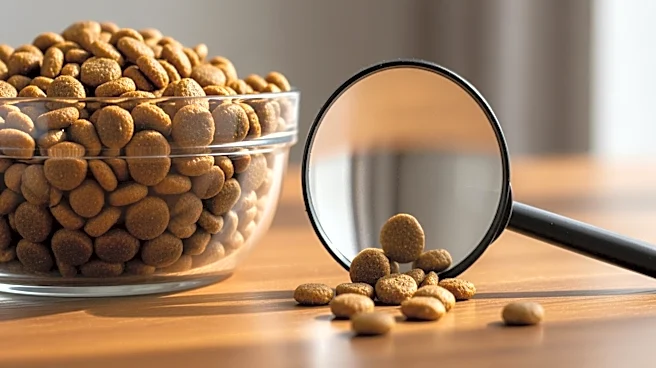
that raw pet diets, often marketed as more 'natural,' carry a higher risk of harmful bacteria. This assertion is based on a study by the FDA's Center for Veterinary Medicine, which found that a significant percentage of raw pet food samples tested positive for salmonella and listeria. However, critics argue that the article misleads the public by not adequately addressing the risks associated with kibble pet food. Historical data shows that a vast majority of pet food recalls due to pathogenic bacteria involve kibble, not raw pet food. For instance, from 2012 to 2025, 98.6% of recalled pet food was kibble, while raw pet food accounted for only 0.59%. This discrepancy has led to accusations that the CSPI's article may cause complacency among pet owners regarding kibble safety.
Why It's Important?
The controversy surrounding the CSPI's article highlights the ongoing debate over pet food safety and the potential health risks to humans. With millions of pounds of pet food recalled over the years due to bacterial contamination, understanding the true risks associated with different types of pet food is crucial for public health. The article's focus on raw pet food could divert attention from the more significant issue of kibble contamination, which has been linked to a higher number of human illnesses. This misrepresentation could lead to inadequate safety practices among pet owners, potentially increasing the risk of bacterial infections. The situation underscores the need for accurate and balanced information to guide consumer behavior and policy decisions in the pet food industry.
What's Next?
The backlash against the CSPI's article may prompt further scrutiny of pet food safety standards and the communication of risks to the public. Regulatory bodies like the FDA might be encouraged to provide clearer guidelines and more comprehensive data on pet food safety to prevent misinformation. Additionally, consumer advocacy groups may push for more transparency and accountability in the pet food industry to ensure that safety concerns are adequately addressed. This could lead to increased pressure on manufacturers to improve safety measures and reduce the risk of contamination in both kibble and raw pet food products.