



What's Happening?
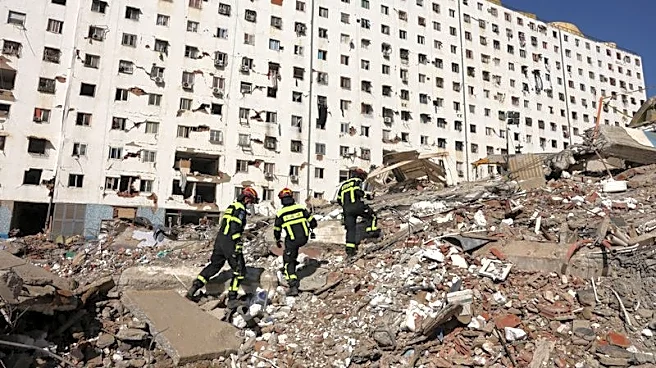
The 2016 earthquake in Manabí, Ecuador, revealed significant deficiencies in the country's disaster preparedness and response mechanisms. According to a recent analysis, the absence of regular, mandatory drills in schools, offices, and public spaces contributed
to a lack of public awareness regarding safe zones and evacuation routes. Furthermore, coordination among emergency services such as ECU 911, firefighters, the Red Cross, hospitals, and traffic agents was largely dependent on individual goodwill rather than established, rehearsed protocols. This improvisational approach to a rapid-onset event like an earthquake resulted in numerous casualties. The country, situated within the 'Ring of Fire,' faces a continuous seismic risk, making these preparedness shortcomings particularly concerning.
Why It's Important?
The identified gaps in Ecuador's earthquake preparedness have critical implications for public safety and national resilience. The lack of mandatory drills and unified protocols means that in the event of another major seismic activity, the population remains vulnerable, and emergency services may struggle to provide an effective, coordinated response. This situation can lead to increased fatalities, injuries, and prolonged recovery efforts. For the U.S., while this directly concerns Ecuador, it highlights the broader importance of robust disaster preparedness in seismically active regions, especially for countries with significant economic or strategic ties. Inadequate disaster response in neighboring nations can lead to humanitarian crises that may require international aid and support, potentially involving U.S. resources and expertise.
What's Next?
To address these critical issues, a national risk management policy is being advocated for in Ecuador. This policy would include mandatory quarterly drills across all sectors, from basic education to workplaces. It also calls for unified protocols among all relief institutions and sustained public communication campaigns to educate citizens on actions to take before, during, and after an earthquake. Additionally, there is a push for investment in earthquake-resistant infrastructure. Authorities are urged to prioritize and budget for prevention rather than treating it as a postponable expense, while citizens are encouraged to demand and practice preparedness. The goal is to shift from improvisation to preparation as the standard response to future seismic events.
Beyond the Headlines
The situation in Ecuador underscores a deeper societal challenge: the transition from reactive crisis management to proactive risk reduction. The reliance on 'individual goodwill' rather than institutionalized protocols points to a cultural aspect where disaster preparedness may not be deeply embedded in daily life or organizational structures. This can have long-term consequences, not only in terms of human lives but also economic stability and public trust in government. The call for mandatory drills and unified protocols represents an effort to institutionalize a culture of preparedness, which is essential for any nation in a high-risk zone. The ethical dimension of governmental responsibility to protect its citizens from foreseeable natural disasters is also highlighted, emphasizing the need for sustained investment in prevention over costly post-disaster recovery.