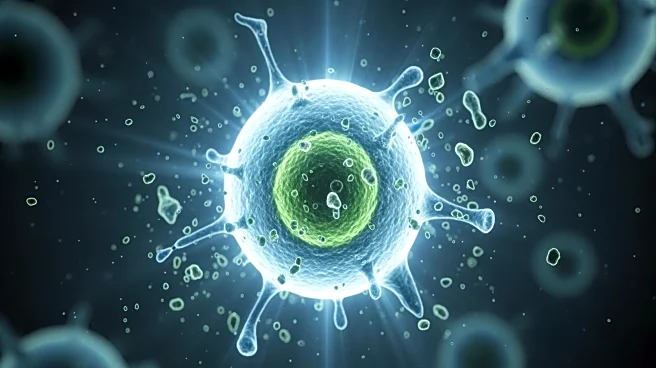

What's Happening?
Researchers at Vilnius University have discovered a bacterial defense system called SPARDA that detects viral RNA and triggers self-destruction to prevent the spread of infection. This system uses a short
RNA guide to confirm the presence of an invader, activating a molecular switch that initiates a DNA-cutting attack, leaving the cell beyond repair. The study highlights a form of bacterial immunity based on sacrifice rather than survival, where infected cells self-destruct to protect the broader population. The research, led by Dr. Mindaugas Zaremba, reveals a hidden layer of bacterial defenses that could inspire new nucleic-acid sensors and smarter treatments.
Why It's Important?
The discovery of SPARDA offers insights into bacterial immunity and could have significant implications for biotechnology and medicine. Understanding bacterial self-destruction mechanisms can aid in developing new treatments for infections, particularly as antibiotic resistance grows. Phage therapy, which uses bacteriophages to treat infections, could benefit from this knowledge, as it requires understanding bacterial defense mechanisms. Additionally, the study's findings could lead to improved food fermentation processes by protecting starter cultures from phage attacks. The research provides a foundation for designing new research tools and therapeutic strategies, potentially transforming microbial survival tactics into practical applications.
What's Next?
Future research will focus on testing SPARDA-like filaments during real infections and tuning the molecular switch to keep DNA cutting inactive until a specific signal appears. This could enhance the development of bacteriophage therapies and nucleic-acid sensors. Researchers aim to map the hidden rules of microbial life, where survival often depends on group-level outcomes. The Vilnius team plans to explore how SPARDA can be used in designing research tools and treatments, potentially leading to breakthroughs in understanding bacterial immunity and developing new therapeutic approaches.