
What's Happening?
Shigeru Ishiba, a former Japanese politician, has been instrumental in re-establishing a 'diplomacy itinerant' approach with South Korea. This strategy involves frequent visits and meetings between the
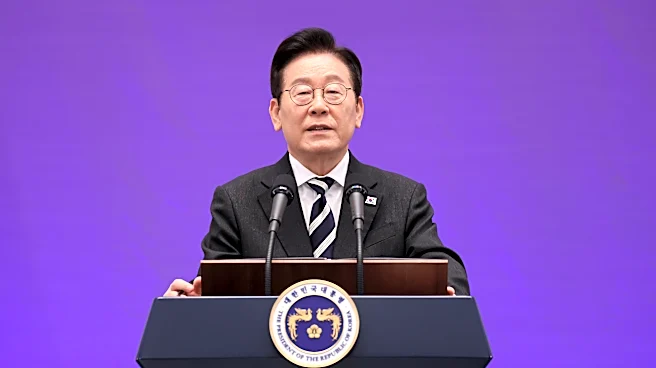
leaders of the two nations, aiming to foster improved relations after years of friction. The current Japanese Prime Minister, Sanae Takaichi, has continued this diplomatic initiative, maintaining regular engagements with South Korean President Lee Jae Myung. President Lee Jae Myung has publicly acknowledged the positive impact of these efforts, stating that relations between South Korea and Japan have improved significantly. The leaders have met multiple times, including visits to each other's hometowns, and President Lee is scheduled to visit Japan again in January following an invitation from Prime Minister Takaichi. This sustained diplomatic activity signifies a concerted effort to strengthen bilateral ties.
Why It's Important?
The re-establishment of robust diplomatic ties between Japan and South Korea, spearheaded by figures like Shigeru Ishiba, holds significant importance for regional stability and international relations. Both nations are key U.S. allies in East Asia, and their improved cooperation can contribute to a more unified front against geopolitical challenges in the Indo-Pacific. Enhanced relations can facilitate greater economic collaboration, potentially boosting trade and investment between two of Asia's largest economies. Furthermore, a stronger Japan-South Korea relationship can streamline coordination on critical security issues, such as North Korea's nuclear program, and contribute to broader multilateral efforts. For the U.S., this development is beneficial as it reduces potential friction between two allies, allowing for more cohesive strategic planning and burden-sharing in the region. Conversely, a deterioration of these ties could complicate U.S. foreign policy objectives and create vulnerabilities in regional security architecture.
What's Next?
The continuation of the 'diplomacy itinerant' approach by Prime Minister Sanae Takaichi, including the upcoming visit of South Korean President Lee Jae Myung to Japan in January, indicates a sustained commitment to improving bilateral relations. These ongoing high-level meetings are expected to further solidify the positive trajectory of Japan-South Korea ties. Future discussions will likely focus on expanding cooperation in economic, security, and cultural spheres. The leaders may explore joint initiatives on regional challenges, potentially leading to new agreements or partnerships. The success of these diplomatic efforts could also set a precedent for other nations in the region to resolve historical disputes through consistent engagement. However, the long-term sustainability of these improved relations will depend on addressing underlying issues and maintaining consistent political will from both sides.
Beyond the Headlines
The diplomatic efforts initiated by Shigeru Ishiba and continued by Prime Minister Sanae Takaichi represent a deeper shift towards pragmatic engagement over historical grievances between Japan and South Korea. This approach acknowledges the necessity of cooperation in a complex geopolitical landscape, where shared economic and security interests often outweigh past disputes. The 'diplomacy itinerant' model itself highlights a commitment to personal diplomacy and direct communication, which can be crucial in building trust and understanding between leaders. This development could also influence public perception in both countries, gradually fostering a more positive view of the bilateral relationship. The ethical dimension involves moving beyond historical narratives to forge a future-oriented partnership, while the cultural implications could include increased exchanges and mutual understanding, ultimately contributing to a more stable and prosperous East Asia.