








What's Happening?
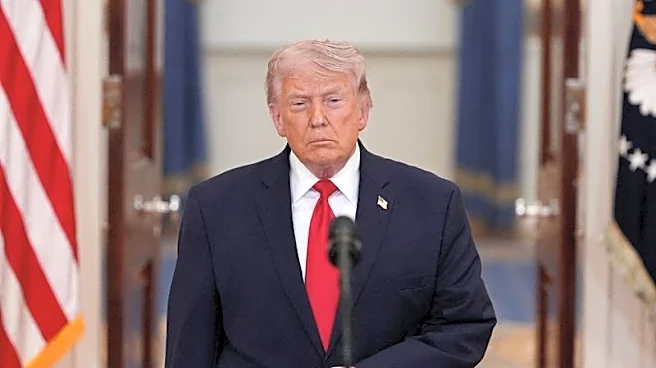
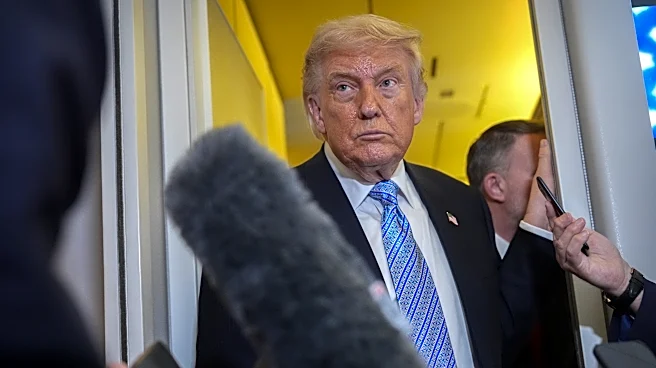
President Donald Trump's approval rating has reached a record low during his second term, according to a recent New York Times/Siena poll. The poll indicates widespread dissatisfaction with Trump's presidency, particularly due to economic issues and his decision
to initiate a war with Iran. Only 30% of voters believe that launching the war was the right decision, and a significant majority, 55% to 21%, think the war will not justify its costs. Trump's handling of the economy and inflation is also criticized, with 64% disapproving of his economic management and 70% disapproving of his approach to the cost of living. The poll also reveals that Democrats have gained a substantial lead on the generic ballot for the upcoming midterm elections, with 50% of registered voters preferring Democratic candidates over 39% for Republicans.
Why It's Important?
The declining approval ratings for President Trump highlight significant challenges for his administration, particularly in maintaining support among key voter demographics. The dissatisfaction with his economic policies and foreign policy decisions, such as the war with Iran, could have substantial implications for the upcoming midterm elections. The shift in voter preference towards Democratic candidates suggests potential changes in congressional power dynamics, which could impact legislative priorities and the administration's ability to implement its agenda. The poll results also indicate a potential realignment of voter support, with some demographics that previously supported Trump now favoring Democratic candidates.
What's Next?
As the midterm elections approach, the Trump administration may need to address the concerns highlighted by the poll to regain voter confidence. This could involve reassessing economic policies and foreign policy strategies to better align with voter expectations. The administration's response to these challenges will be crucial in shaping the political landscape and determining the outcome of the midterms. Additionally, the Democratic Party may seek to capitalize on the current dissatisfaction with Trump's presidency to strengthen their position in Congress.