








What's Happening?
Gordon S. Wood, a distinguished historian known for his influential works on the American Revolution, has died at the age of 92. Wood was fatally struck by a car in a supermarket parking lot in East Providence, Rhode Island. His daughter, Amy Wood, confirmed
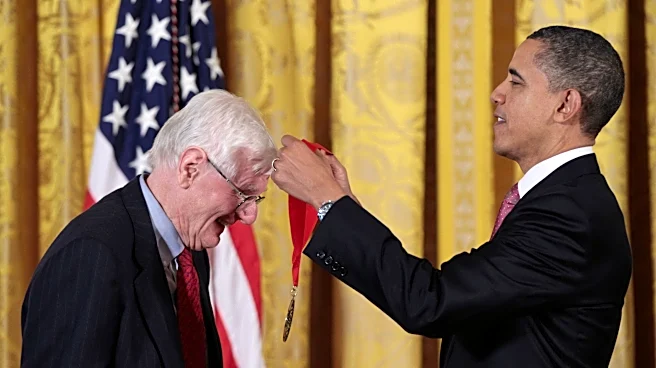
the incident, stating that arrangements for his memorial had not yet been made. Wood was a professor emeritus at Brown University and authored several acclaimed books, including 'The Creation of the American Republic' and 'The Radicalism of the American Revolution.' His scholarship earned him numerous accolades, including the National Humanities Medal presented by President Barack Obama in 2011. Despite his acclaim, Wood faced criticism from some younger academics who felt his work did not adequately address the roles of marginalized groups in American history.
Why It's Important?
Gordon Wood's death marks the loss of a significant figure in American historical scholarship. His work has shaped the understanding of the American Revolution and its impact on the formation of the United States. Wood's interpretations have been both celebrated and debated, influencing generations of historians and students. His passing may prompt a reevaluation of his contributions and the ongoing discourse about the inclusivity of historical narratives. The incident also highlights the broader issue of pedestrian safety, as Wood's death occurred in a seemingly routine setting, underscoring the potential dangers in everyday environments.
What's Next?
In the wake of Wood's death, the academic community may engage in discussions about his legacy and the future direction of Revolutionary War studies. There could be renewed interest in his works, as well as critical analyses of his interpretations. Additionally, the incident may lead to increased awareness and potential policy discussions regarding pedestrian safety in public spaces. As arrangements for Wood's memorial are made, tributes from colleagues, students, and historians are likely to emerge, celebrating his contributions to the field.
Beyond the Headlines
Wood's death may also spark conversations about the evolving nature of historical scholarship. His critiques of projects like The New York Times' 1619 Project reflect ongoing debates about how history is taught and understood in the United States. Wood's emphasis on understanding history without moral judgment could influence future historiographical approaches. Furthermore, his work serves as a reminder of the complexities involved in interpreting historical events and the importance of balancing traditional narratives with emerging perspectives.