




What's Happening?
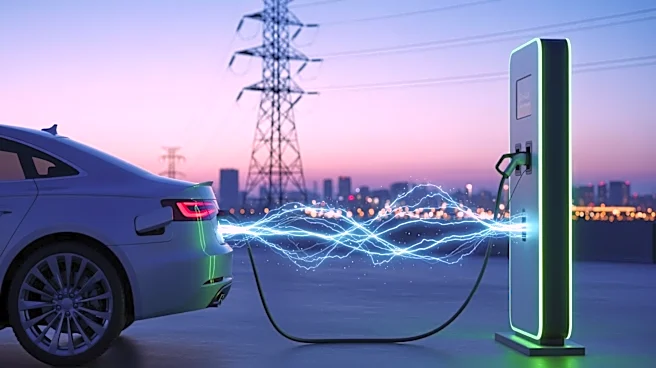
A pilot project in Delaware has demonstrated that electric vehicle (EV) owners can earn significant income by participating in vehicle-to-grid (V2G) systems. The project involved retrofitting four Ford EVs owned by Delmarva Power to supply electricity
back to the grid. This initiative allows parked EVs to act as collective batteries, storing excess renewable energy and distributing it during peak demand. According to Willett Kempton from the University of Delaware, this method could provide grid storage at a fraction of the cost of building new batteries. The project showed that each EV could potentially earn up to $3,359 annually by selling stored energy at market prices.
Why It's Important?
The Delaware project highlights a potential shift in how energy systems can be managed, offering a cost-effective solution to balance renewable energy supply and demand. By integrating V2G technology, the reliability of electric systems could be enhanced, facilitating the integration of more renewable energy sources. This development could lead to financial benefits for EV owners and reduce the need for expensive battery infrastructure. However, widespread adoption requires collaboration between car manufacturers, utility companies, and governments to standardize V2G technology and create viable economic incentives for consumers.
What's Next?
For V2G technology to become mainstream, significant infrastructure upgrades and standardization efforts are necessary. The complexity of reversing energy flow from cars to the grid requires new safety standards and technological advancements. Companies like Volkswagen and Tesla are developing different V2G systems, but a unified approach is needed to scale the technology. Additionally, power grids may need upgrades to handle increased V2G participation, suggesting a need for strategic planning and investment in grid infrastructure.