






What's Happening?
PerfectServe, a healthcare technology company specializing in AI-powered clinical communication, announced on November 17, 2026, that it is utilizing Twilio's Conversation Relay to power voice interactions in its Intelligent Answering solution. This integration
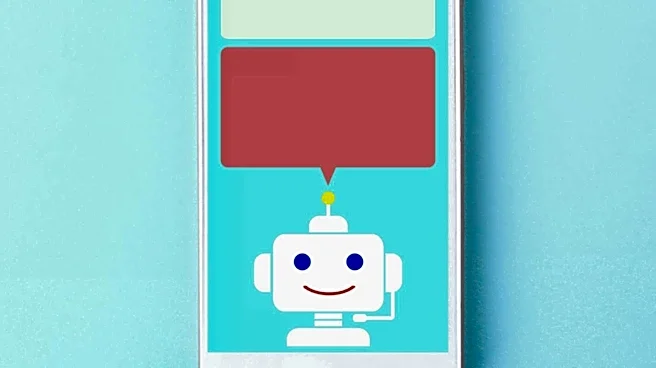
combines natural conversation capabilities with PerfectServe's practice-specific schedules, coverage rules, and routing protocols. The goal is to enable patients to connect with the appropriate healthcare personnel more efficiently while simultaneously reducing the volume of routine call handling for staff. The Intelligent Answering system introduces callers to 'Sloane,' PerfectServe's AI voice agent, which gathers information, answers common questions, and directs calls based on configured workflows. Twilio's Conversation Relay facilitates the speech recognition and voice generation, allowing for natural dialogue rather than menu-driven interactions. Early reports indicate that this system can resolve up to 70% of routine calls without staff intervention and direct callers 40% faster than traditional live agents.
Why It's Important?
This collaboration between PerfectServe and Twilio holds significant importance for the U.S. healthcare industry. By leveraging AI for initial patient interactions, healthcare providers can alleviate the burden of routine calls on their staff, allowing them to focus on more critical tasks. This can lead to improved operational efficiency, reduced wait times for patients, and potentially higher patient satisfaction. The ability of the Intelligent Answering system to understand and respond naturally in both English and Spanish, with plans for over 70 additional languages, addresses a critical need for multilingual support in healthcare, enhancing accessibility for diverse patient populations. Furthermore, the integration of Twilio's reliable and scalable voice layer ensures that PerfectServe can maintain high-quality, responsive communication, which is paramount in healthcare settings where timely and accurate information can be life-saving. This development underscores a growing trend of AI adoption in healthcare to optimize administrative processes and improve patient care pathways.
What's Next?
PerfectServe plans to expand its AI voice applications across its platform, indicating a broader integration of Twilio's Conversation Relay beyond the initial Intelligent Answering solution. This suggests that more healthcare workflows, such as appointment scheduling, prescription refills, and general inquiries, could soon be managed by AI voice agents. The continuous development of language support will further enhance the system's reach and utility for a wider demographic. As the healthcare industry continues to grapple with staffing shortages and increasing patient demands, the adoption of advanced AI solutions like PerfectServe's Intelligent Answering, powered by Twilio, is likely to accelerate. Future developments may include more sophisticated AI capabilities for handling complex medical queries, integrating with electronic health records (EHRs) for personalized responses, and providing real-time support for clinicians. The success of this initial deployment will likely serve as a model for other healthcare organizations seeking to modernize their communication infrastructure.
Beyond the Headlines
Beyond the immediate operational benefits, the deployment of AI voice agents in healthcare raises important ethical and practical considerations. Ensuring the accuracy and reliability of AI in medical contexts is paramount, as errors could have serious consequences. PerfectServe's emphasis on 'practice-specific rules, schedules, and configured urgency protocols' highlights the need for AI systems to be highly customized and context-aware within the sensitive healthcare environment. There is also the broader implication for patient-provider relationships; while AI can handle routine tasks, the human element remains crucial for empathy, complex decision-making, and addressing patient anxieties. The balance between AI efficiency and human-centered care will be a key challenge. Furthermore, data privacy and security in handling sensitive patient information through AI systems will require robust safeguards and compliance with regulations like HIPAA. This technological shift could redefine the patient experience, making healthcare more accessible and efficient, but also necessitating careful consideration of its human and ethical dimensions.