







What's Happening?
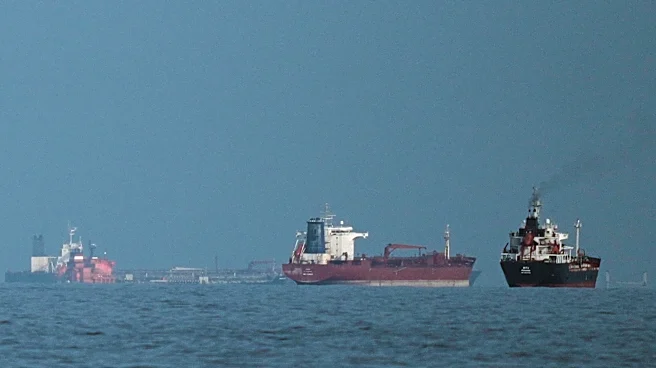
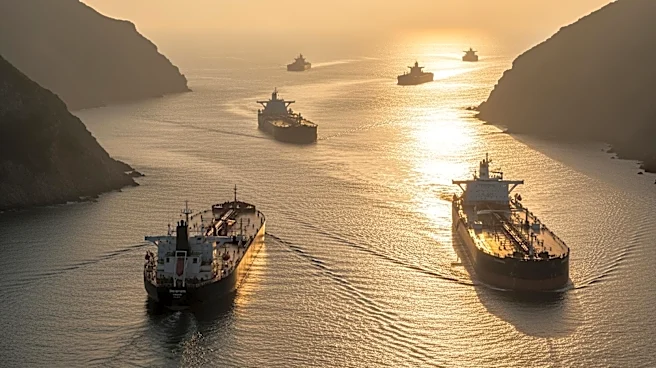
On April 13, the U.S. initiated a blockade of the Strait of Hormuz, a critical chokepoint for global oil transportation. This action led to significant market volatility, with stocks experiencing fluctuations between losses and gains. The blockade has
also resulted in a rise in oil prices, reflecting the strategic importance of the Strait, through which a substantial portion of the world's oil supply is transported. The U.S. decision to block the Strait is part of broader geopolitical tensions, although specific details about the motivations or expected duration of the blockade were not provided in the report.
Why It's Important?
The blockade of the Strait of Hormuz by the U.S. has immediate and far-reaching implications for global energy markets and economic stability. As a major transit route for oil, any disruption in the Strait can lead to increased oil prices, affecting industries reliant on oil and potentially leading to higher consumer prices. The market volatility observed reflects investor uncertainty and the potential for broader economic impacts. This development could strain international relations, particularly with countries dependent on oil imports through the Strait, and may influence U.S. foreign policy and military strategy in the region.
What's Next?
The continuation of the blockade could lead to prolonged market instability and further increases in oil prices. Stakeholders, including international governments and oil companies, may seek diplomatic solutions to mitigate the impact. The U.S. government may face pressure to clarify its objectives and timeline for the blockade. Additionally, there could be increased diplomatic activity aimed at resolving underlying geopolitical tensions that prompted the blockade. Monitoring the situation will be crucial for businesses and governments to adapt to potential changes in the global oil supply chain.