







What's Happening?
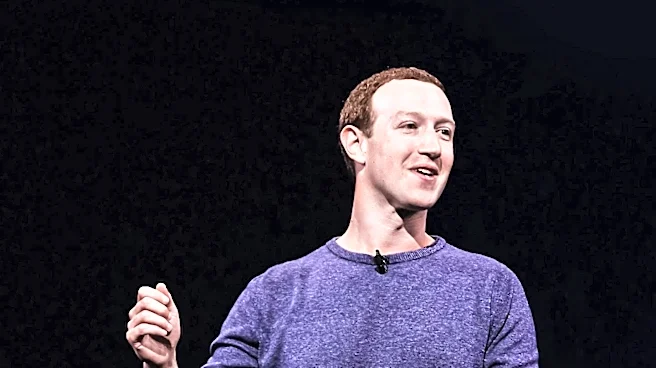
Mark Zuckerberg, CEO of Meta, has suggested that artificial intelligence (AI) could help address the issue of loneliness, stating that the average American desires more connections than they currently have. He believes that personalized AI, which gets
to know users better, will be 'really compelling' in filling this gap. This proposal comes at a time when the U.S. Surgeon General Vivek Murthy has warned of an 'epidemic of loneliness and isolation,' with one in two adults experiencing measurable levels of loneliness, particularly among young people. Murthy and others have pointed to social media and online interactions as contributing factors to this issue. Additionally, rates of depression and anxiety are increasing, with depression prevalence nearly doubling in a decade among those aged 12 and older.
Why It's Important?
Zuckerberg's proposition to use AI as a solution for loneliness is significant because it highlights a growing debate about the role of technology in mental health and social well-being. Critics argue that introducing AI 'friends' could exacerbate existing problems, as it offers a technological fix to issues potentially caused by technology itself. The U.S. is grappling with rising rates of loneliness, depression, and anxiety, and the effectiveness and ethical implications of AI companions are under scrutiny. This discussion impacts the tech industry, mental health professionals, and public policy, as it questions whether virtual interactions can genuinely fulfill fundamental human needs for physical presence, effortful relationship building, and authentic connection. The potential for companies to monetize loneliness through AI raises concerns about corporate responsibility and the long-term societal impact of such solutions.
What's Next?
The debate surrounding AI companions and their impact on mental health is likely to intensify. Tech companies, including Meta, will likely continue to develop and promote AI-driven solutions for social interaction, driven by market opportunities. However, there will also be increased scrutiny from mental health experts, policymakers, and the public regarding the ethical guidelines and potential risks associated with these technologies. Research into the long-term effects of AI companionship on human psychology and social development will be crucial. Public health initiatives may focus on promoting real-world social connections and digital literacy to help individuals navigate their online and offline lives more effectively. The conversation will also likely influence regulatory discussions around AI and its application in sensitive areas like mental health.
Beyond the Headlines
The deeper implications of Zuckerberg's suggestion touch upon the very definition of human connection and the evolving nature of relationships in a technologically advanced society. If AI 'friends' become prevalent, it could fundamentally alter how individuals perceive and pursue companionship, potentially leading to a further erosion of real-world social skills and community bonds. There are ethical considerations regarding the authenticity of these relationships, the potential for manipulation, and the impact on emotional development, especially for younger generations. The reliance on AI for emotional support could also create a dependency that deters individuals from engaging in the often challenging but ultimately more rewarding work of building genuine human connections. This trend could lead to a more isolated society, despite the illusion of constant connectivity provided by AI.