
What's Happening?
The Pentagon is being called upon to re-evaluate and adapt its military acquisition strategies, drawing lessons from the ongoing conflict in Ukraine. Experts, including Barak Seener of the Henry Jackson
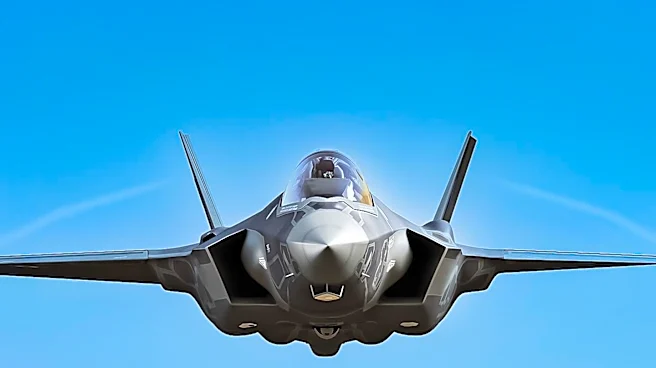
Society, highlight the stark contrast between the rapid, adaptive use of civilian technologies by Ukrainian forces and the persistent issues of delays, cost overruns, and adaptation difficulties plagencing major U.S. and European military programs. These large-scale programs, such as the British Ajax armored vehicle, the U.S. Zumwalt destroyer, and the F-35 fighter jet, consume significant human, industrial, and budgetary resources over extended periods, often exceeding a decade. The rapid evolution of technology and military requirements means that by the time these sophisticated systems are deployed, they may no longer precisely meet the initial design conditions. China's approach, which involves adapting civilian industrial and technological models for military use, further intensifies this pressure. The increasing digitalization, automation, and robotization in manufacturing allow less powerful actors to bridge capability gaps by producing relatively simple equipment quickly and in large quantities, which can challenge forces relying on fewer, more complex, and harder-to-replace systems.
Why It's Important?
This re-evaluation is crucial for U.S. national security and defense industrial policy. The current acquisition model, characterized by lengthy development cycles and high costs, risks leaving the U.S. at a disadvantage against adversaries who can rapidly innovate and deploy more numerous, albeit simpler, systems. The lessons from Ukraine underscore the strategic value of competition, decentralization, and commercial innovation in military procurement. Embracing these principles could lead to more agile and cost-effective defense capabilities, ensuring that the U.S. military remains competitive and adaptable to evolving threats. Failure to adapt could result in continued reliance on expensive, slow-to-deploy systems that may not meet the demands of modern warfare, potentially impacting the effectiveness of U.S. forces and the security of its allies. This shift could also influence the U.S. defense industry, encouraging greater integration of commercial technologies and fostering a more dynamic and responsive industrial base.
What's Next?
The call to action suggests that the Pentagon needs to directly integrate operational feedback from conflicts like the one in Ukraine into its program definition, funding, and termination processes. This implies a potential shift towards prioritizing rapid prototyping, modular designs, and the integration of commercially available technologies where appropriate. Future acquisition strategies may emphasize smaller, more numerous, and rapidly deployable systems, alongside continued investment in high-end capabilities. This could lead to policy changes aimed at streamlining procurement, fostering innovation within the defense sector, and encouraging greater collaboration with commercial technology companies. The ongoing debate will likely involve discussions on how to balance the need for cutting-edge, complex systems with the agility and cost-effectiveness demonstrated by more adaptable approaches.
Beyond the Headlines
The implications extend beyond mere procurement adjustments, touching upon the fundamental philosophy of military technological development. It highlights a potential paradigm shift from a focus on singular, highly advanced platforms to a more diversified and resilient defense ecosystem. This could foster a culture of continuous innovation and adaptation within the military and defense industry, moving away from rigid, long-term development cycles. Ethically, it raises questions about the responsible integration of rapidly evolving technologies and the balance between technological superiority and operational flexibility. The long-term impact could reshape the global defense landscape, influencing how nations approach military spending, technological investment, and strategic alliances, particularly within NATO, as allies also grapple with similar challenges in their own defense programs.