
What's Happening?
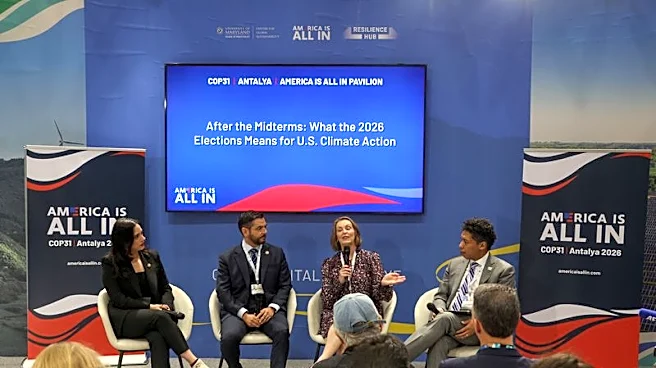
Palo Alto Mayor Vicki Veenker attended the 31st United Nations Climate Change Conference (COP31) in Antalya, Turkey, as part of a U.S. delegation emphasizing local climate action despite federal policy
shifts. Mayor Veenker's objective was to both learn from and share Palo Alto's successes in reducing greenhouse gas emissions. She met with leaders from countries like Korea and Japan to understand their national-local cooperation models for climate plans. In return, she highlighted Palo Alto's progress, including a nearly 50% reduction in emissions despite a 20.5% population growth, and the Bay Area Air Quality Management District's efforts in electrifying appliances. Her participation aimed to inspire other cities globally and reassure international partners that U.S. local leaders are making significant climate progress. The trip's expenses, totaling approximately $62,000, were covered by the Bay Area Air Quality Management District.
Why It's Important?
Mayor Veenker's presence at COP31 underscores the growing importance of subnational entities, such as cities and states, in addressing climate change, especially when federal policies may be perceived as less proactive. Her efforts to share Palo Alto's achievements and learn from international counterparts demonstrate a model of 'multiplied impact' where local initiatives can influence global climate strategies. This approach is crucial for maintaining momentum in climate action and fostering international collaboration, even amidst varying national political climates. The emphasis on local progress can inspire other U.S. cities and regions to pursue ambitious climate goals, contributing to the overall national effort. Furthermore, the U.S. delegation's message aims to alleviate international anxieties about the U.S.'s commitment to climate action, reinforcing the idea that a significant portion of the country remains dedicated to environmental sustainability.
What's Next?
Mayor Veenker's participation is expected to foster continued international partnerships and knowledge exchange, potentially leading to the adoption of successful climate strategies in Palo Alto and other U.S. cities. The insights gained from countries like Korea regarding national-local cooperation could inform future policy discussions and implementation strategies within the U.S. The ongoing efforts by the Bay Area Air Quality Management District to restrict gas appliances and promote electrification are likely to continue, setting a precedent for other regions. The broader U.S. delegation's goal of showcasing strong local climate leadership will persist, with mayors and governors continuing to engage in global forums to demonstrate commitment and progress. These local actions will remain vital in shaping the U.S.'s overall climate narrative and its standing in international environmental efforts.
Beyond the Headlines
The narrative of local leaders stepping up in the absence of perceived strong federal climate action highlights a significant shift in environmental governance. It suggests a decentralized approach to global challenges, where cities and regions become critical actors in policy innovation and implementation. This trend could lead to a more resilient and diverse set of climate solutions, tailored to specific local contexts. The financial investment by the Bay Area Air Quality Management District in sending representatives to an international summit also points to the recognition that local environmental issues are interconnected with global ones, necessitating international engagement. This engagement not only facilitates learning but also allows U.S. local governments to project influence and leadership on the world stage, potentially inspiring a bottom-up movement for climate action that transcends national political divides.