








What's Happening?
A recent study has put forth a three-pronged strategy for African nations to increase their influence on the United Nations Security Council (UNSC). The study, authored by IBN Yussif Duranah Abdul-Mumin Seidu, the Upper West Regional Public Relations
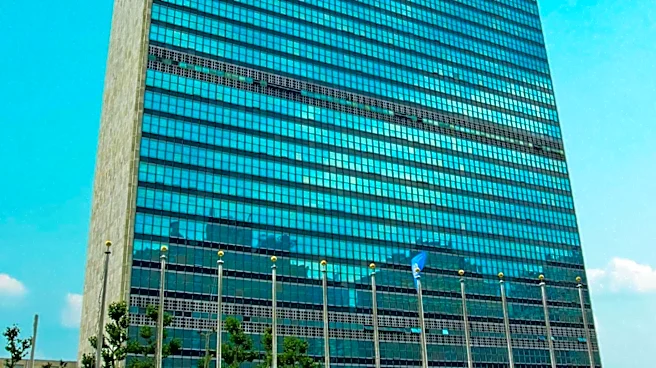
Officer for the Ghana Immigration Service, argues that Africa's consistent participation in the UN General Assembly (UNGA) has not resulted in the structural representation it seeks within the UNSC. Despite Africa comprising 54 member states, it lacks a permanent seat on the UNSC, which is the primary UN body responsible for international peace and security. The current structure, with five permanent members holding veto power, creates a significant imbalance. The study characterizes Africa's role in the UN as having more 'noise' than 'voice,' as African leaders can address the UNGA but lack binding decision-making power in the UNSC. The proposed strategy includes a temporary coordinated diplomatic boycott of the UNGA, a counter-summit in Addis Ababa, and conditional re-engagement with the UN system.
Why It's Important?
This proposed strategy highlights a significant challenge to the existing global governance framework and could have substantial implications for international diplomacy and the balance of power within the United Nations. If African nations were to implement a coordinated diplomatic boycott of the UNGA, it would represent a powerful collective action, drawing global attention to their demands for UNSC reform. Such a move could disrupt the normal functioning of the UNGA and pressure permanent UNSC members to seriously consider the long-standing calls for greater African representation. The study emphasizes that Africa, despite contributing significantly to peacekeeping efforts and having a majority of its issues on the UNSC agenda, remains a 'norm-taker' rather than a 'norm-maker.' Achieving permanent representation with veto rights, as outlined in the Ezulwini Consensus and Sirte Declaration, would fundamentally alter the UNSC's decision-making process, potentially leading to different outcomes on critical international security matters and giving Africa a more equitable voice on the global stage.
What's Next?
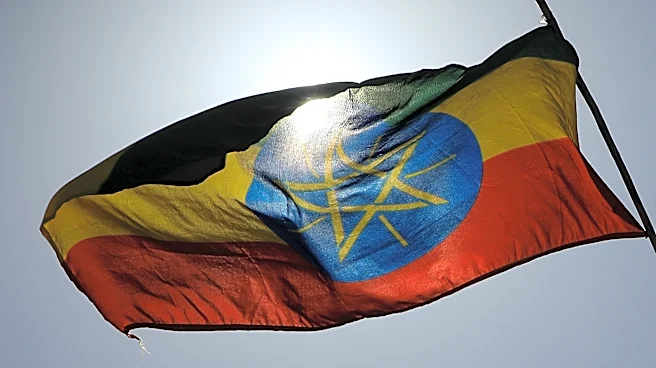
The study recommends a 'Coordinated Diplomatic Boycott (CDB)' as a bargaining strategy to highlight Africa's demand for structural reforms at the UNSC. Following this, the African Union (AU) is proposed to convene a counter-summit in Addis Ababa, Ethiopia. This summit would serve to coordinate African leaders' positions on UN reform and reaffirm the Common African Position, which advocates for at least two permanent seats for Africa on the UNSC, complete with veto rights. The final step involves 'conditional re-engagement' with the UNGA, contingent on a time-bound roadmap for UNSC reforms. This phased approach suggests a deliberate and strategic effort to leverage collective action to achieve specific reform objectives. The financial implications of African countries' annual participation in the UNGA are also raised, suggesting that the cost-benefit of current engagement is being re-evaluated in light of the lack of desired structural representation.
Beyond the Headlines
The proposed strategy delves into the deeper issues of equity and representation within international institutions. The argument that Africa, despite its demographic size, economic potential, and significant contributions to global peace, lacks commensurate decision-making power in the UNSC, underscores a broader critique of post-World War II global governance structures. The call for permanent seats with veto power challenges the historical prerogatives of the current permanent members and could set a precedent for other underrepresented regions to demand similar reforms. This initiative could also foster greater unity and strategic coordination among African nations, potentially strengthening the AU's role as a significant geopolitical actor. The ethical dimension of 'norm-taking' versus 'norm-making' is central, as it questions whether the current system adequately reflects the diverse perspectives and interests of the global community, particularly those most affected by the UNSC's decisions.