
What's Happening?
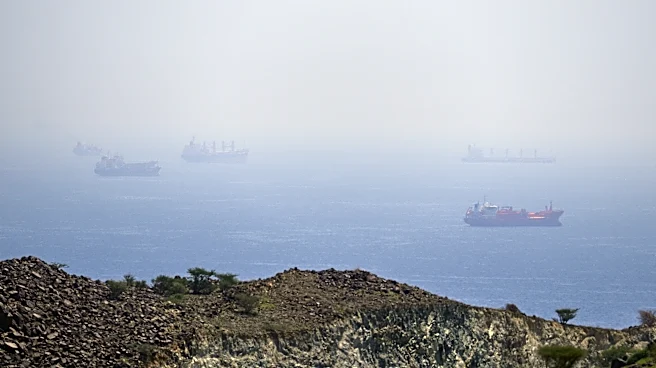
In the midst of ongoing tensions between Iran, the US, and Israel, maritime analysts have observed a significant increase in the number of 'spoofed' tankers in the Strait of Hormuz. Michelle Wiese Bockmann,
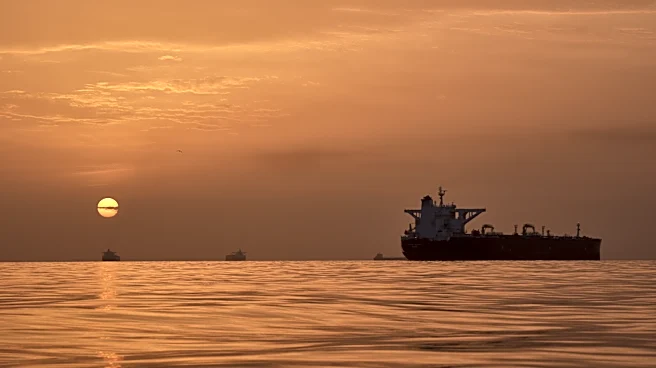
a senior maritime intelligence analyst at Windward AI, reports that many ships are turning off their transponders to avoid detection, a practice that has been common among 'shadow fleets' transporting crude oil from Iran in violation of international sanctions. The scale of this activity has increased, with over half of the vessels in the strait experiencing signal jamming at one point. Analysts like Bockmann are employing various technologies, including satellite imagery and synthetic-aperture radar, to track these vessels. The disruption in the strait, which is a critical chokepoint for global oil supply, poses risks of collisions and oil spills.
Why It's Important?
The Strait of Hormuz is a vital waterway through which about 20% of the world's petroleum passes. The increased activity of spoofed tankers and the potential for accidents could lead to significant disruptions in global oil supply, affecting prices and economic stability worldwide. The situation underscores the geopolitical tensions in the region and the challenges of enforcing international sanctions. The ability of analysts to track these vessels is crucial for maintaining maritime safety and ensuring compliance with international laws. The ongoing conflict and the strategic importance of the strait highlight the broader implications for global energy markets and international relations.