





What's Happening?
Canada is poised to make a significant decision regarding its military capabilities by choosing between German and South Korean bids to construct a fleet of 12 submarines. This procurement is one of the largest in Canadian history, involving tens of billions
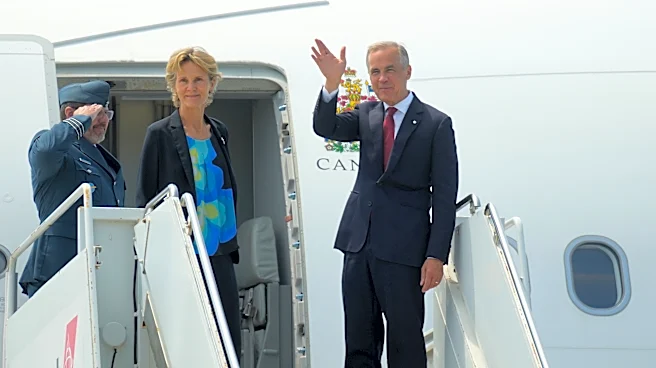
of dollars. The contenders are Germany's ThyssenKrupp Marine Systems and South Korea's Hanwha Ocean. The decision is expected to be announced before Prime Minister Mark Carney's departure to the NATO summit in Turkey. This move aligns with NATO allies' efforts to enhance defense spending. Currently, Canada's submarine fleet consists of four Victoria class submarines, which are barely operational. Both ThyssenKrupp and Hanwha have emphasized the potential economic benefits and job creation their proposals would bring to Canada. Hanwha has also highlighted its KSS-III diesel-electric submarine, which recently completed a trans-Pacific crossing.
Why It's Important?
The decision on which bid to accept holds significant implications for Canada's defense strategy and its role within NATO. By upgrading its submarine fleet, Canada aims to bolster its maritime defense capabilities, contributing to NATO's overall strength. The choice between German and South Korean technology could influence Canada's future military collaborations and economic partnerships. Additionally, the procurement aligns with Canada's commitment to increase defense spending, aiming to meet NATO's target of spending 5% of its GDP on defense by 2035. This decision could also impact local economies through job creation and investment, as both bidders have promised economic benefits.
What's Next?
Following the announcement, Canada will likely proceed with detailed negotiations and planning for the construction and integration of the new submarines. The decision will also be closely watched by NATO allies, as it reflects Canada's commitment to strengthening its military capabilities. The outcome may influence future defense procurement strategies and partnerships with either Germany or South Korea. Additionally, the Canadian government will need to ensure that the chosen bid aligns with its long-term defense and economic goals.