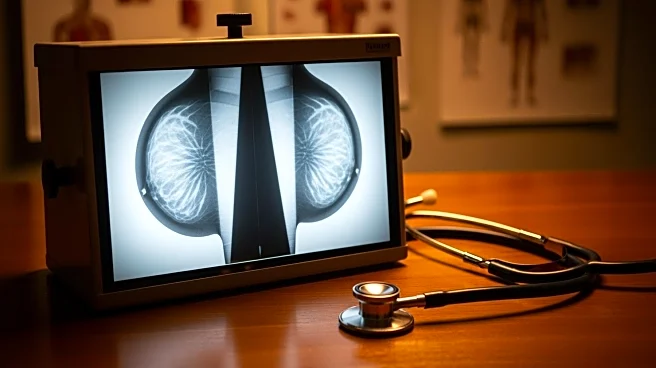

What's Happening?
A study conducted by the Mount Sinai Health System is investigating the potential of mammograms to identify heart disease risks through the detection of breast arterial calcifications (BAC). The study,
which began in 2021, involves a diverse sample of 14,875 women aged 40 and older. It aims to analyze the prevalence of BAC, which are calcium buildups in the breast arteries that may be linked to heart disease. The study's second phase involves 1,888 women with detected BAC, divided into two groups: one receiving immediate notification and education about heart disease risks, and the other receiving standard mammography results with BAC information delayed by six months. Results are anticipated in early 2027. The study highlights cases like Nancy Preston, whose routine mammogram led to the discovery of BAC and subsequent life-saving heart surgery.
Why It's Important?
This research underscores the potential for mammograms, traditionally used for breast cancer screening, to also serve as a tool for early detection of heart disease risks. Heart disease remains a leading cause of death among women, and early detection through routine screenings could significantly impact public health outcomes. The study could lead to changes in mammography reporting practices, encouraging the inclusion of BAC information, which is currently not mandated. This could prompt earlier interventions and lifestyle changes, potentially reducing the incidence of heart disease. The findings may also influence healthcare providers to consider cardiovascular assessments for patients with BAC, thereby integrating heart health considerations into routine breast health screenings.
What's Next?
As the study progresses, healthcare providers and policymakers may need to consider the implications of incorporating BAC findings into standard mammography reports. This could involve educating both medical professionals and patients about the significance of BAC in relation to heart disease. The study's results could lead to updated guidelines for mammography screenings, emphasizing the dual role of these tests in detecting both breast cancer and heart disease risks. Additionally, further research may be required to establish standardized protocols for managing patients with detected BAC, ensuring that the potential benefits of early detection are fully realized.