








What's Happening?
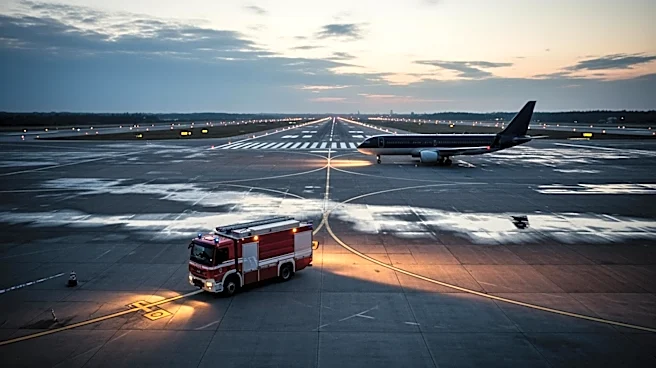
A preliminary report by the National Transportation Safety Board (NTSB) has revealed details about a collision at LaGuardia Airport involving a fire truck and an Air Canada jet. The incident occurred when a fire truck, responding to an emergency, collided
with the jet on the runway, resulting in the deaths of both pilots. The report indicates that a crash prevention system failed to generate an alert, and runway entrance lights were not turned off in time. The fire truck was cleared to cross the runway just seconds before the plane landed, leading to the tragic accident.
Why It's Important?
This incident highlights critical safety concerns at major airports, particularly regarding the coordination between air traffic control and emergency response vehicles. The failure of the crash prevention system and the miscommunication between the control tower and the fire truck underscore the need for improved safety protocols. The tragedy has significant implications for airport operations, emphasizing the importance of ensuring that all vehicles on the runway are equipped with the necessary technology to prevent such accidents.
What's Next?
In response to the findings, there may be calls for a review of safety systems and procedures at LaGuardia and other major airports. The NTSB and other aviation authorities could implement stricter regulations to enhance runway safety and prevent similar incidents. Additionally, there may be increased scrutiny on the training and equipment of emergency response teams operating in airport environments.
Beyond the Headlines
The crash at LaGuardia Airport raises broader questions about the integration of technology in aviation safety. As airports become busier, the reliance on advanced systems to manage traffic and prevent accidents becomes more critical. This incident could prompt discussions about the role of automation in air traffic control and the need for continuous updates to safety infrastructure.