







What's Happening?
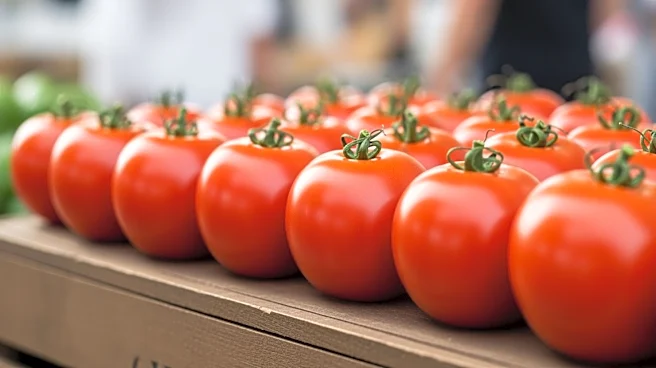
Tomato prices in U.S. supermarkets have seen a significant increase this spring, with a case of Roma tomatoes now costing between $60 to $70, compared to the previous $15. This price surge is attributed to various supply chain challenges affecting the availability
of tomatoes. The increase in tomato prices is part of a broader trend of rising grocery costs, impacting both consumers and retailers. The report highlights the financial strain on consumers who rely on tomatoes as a staple in their diets.
Why It's Important?
The spike in tomato prices is a reflection of broader supply chain disruptions that are affecting food prices across the U.S. This situation underscores the vulnerability of the food supply chain to external factors, such as weather conditions and logistical challenges. For consumers, the increased cost of tomatoes and other produce can strain household budgets, particularly for those with limited financial flexibility. Retailers may also face challenges in maintaining customer satisfaction as they navigate these price increases.
What's Next?
As the situation develops, consumers and retailers will need to adapt to the changing market conditions. Retailers may seek alternative suppliers or adjust their pricing strategies to mitigate the impact on consumers. Additionally, consumers might explore substitutes or adjust their purchasing habits to manage costs. The ongoing supply chain issues may prompt discussions on improving resilience and sustainability in food production and distribution.