





What's Happening?
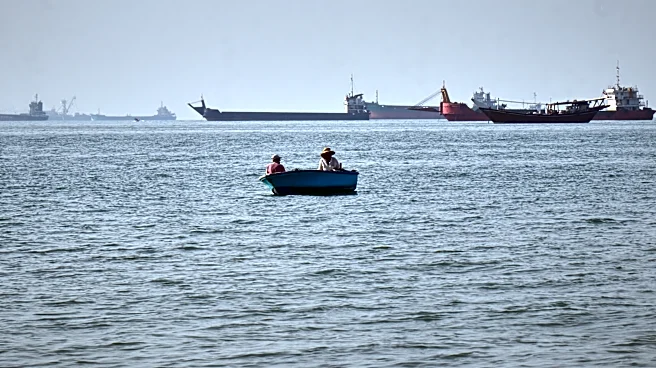
Rising tensions in the Middle East have led to the disruption of the Strait of Hormuz, a critical chokepoint for global shipping. This has prompted major maritime companies to reroute their operations, significantly increasing their presence in West Africa.
Companies like Minerva Bunkering and MSC are expanding their operations in countries such as Mauritania, Senegal, and Nigeria. The rerouting involves longer voyages around the Cape of Good Hope, which has increased the demand for marine fuel and necessitated the establishment of new refueling and repair hubs in West Africa. This shift is positioning the region as a key player in international maritime trade.
Why It's Important?
The redirection of shipping routes to West Africa due to the Hormuz disruption has significant implications for global trade. It highlights the vulnerability of international shipping to geopolitical tensions and the strategic importance of diversifying trade routes. The increased demand for marine fuel and logistical services in West Africa could boost local economies and create new business opportunities. However, it also underscores the potential for increased shipping costs and longer delivery times, which could affect global supply chains and commodity prices.
What's Next?
As maritime firms continue to establish operations in West Africa, the region could see increased investment in port infrastructure and logistics services. This may lead to economic growth and job creation in the area. However, the long-term stability of these new routes will depend on geopolitical developments in the Middle East and the ability of West African ports to handle increased traffic. Companies may also explore further diversification of routes to mitigate risks associated with geopolitical tensions.