



What's Happening?
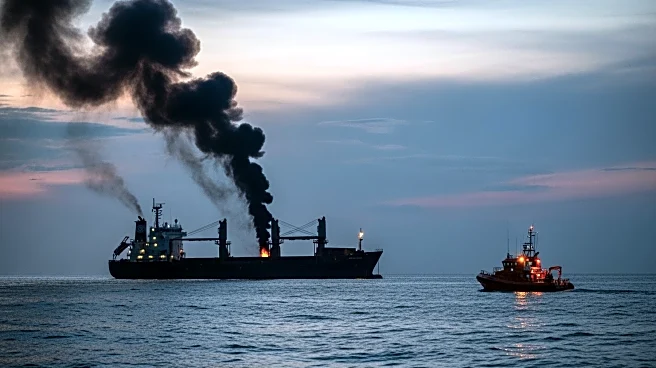
A containership operated by MSC, named MSC Giada III, experienced an explosion and subsequent fire while en route to Saint Petersburg, Russia. The incident occurred in the Gulf of Finland, with reports indicating that the explosion originated in the engine
room and spread to the accommodation block. Russian media have reported on the incident, although there has been no official confirmation from maritime services or MSC. The fire was reportedly contained to a small area, and there were no injuries to the crew or pollution from the ship. The vessel, registered in Liberia, has been in operation for MSC since 2022 and is captained by a Russian national, with some crew members from Myanmar. The ship's AIS signal went offline during the incident but was later restored, showing the vessel berthed in Saint Petersburg.
Why It's Important?
The incident highlights the risks associated with maritime transport, particularly in regions with challenging weather conditions like the Gulf of Finland. The quick response by Russian rescue services, including the dispatch of the icebreaker Semyon Dezhnev, underscores the importance of having robust emergency protocols in place. The lack of injuries and environmental damage is a positive outcome, but the incident could prompt reviews of safety measures on similar vessels. For MSC, a major player in global shipping, maintaining safety standards is crucial to its operations and reputation. The event also draws attention to the international nature of maritime crews and the complexities involved in managing such diverse teams during emergencies.
What's Next?
The vessel's return to port and the restoration of its AIS signal suggest that immediate dangers have been mitigated. However, an investigation into the cause of the explosion is likely to follow, which could lead to changes in safety protocols or operational procedures for MSC and similar shipping companies. Stakeholders, including maritime safety authorities and environmental groups, may call for stricter regulations to prevent future incidents. The outcome of any investigations could influence insurance policies and operational costs for shipping companies operating in the region.