







What's Happening?
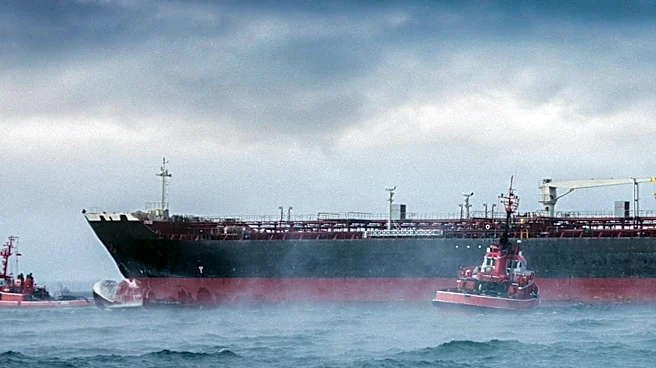
Iranian oil sales continue in the waters off Malaysia despite a US naval blockade aimed at curbing Iran's oil exports. The Eastern Outer Port Limits (EOPL) of Malaysia serves as a marketplace for sanctioned oil, including Iranian crude, which is transferred
between ships in international waters. China, a major buyer of Iranian oil, facilitates these transactions through its Cross-Border Interbank Payment System, allowing payments in renminbi outside the US-monitored SWIFT network. Satellite data shows ongoing activity in the EOPL, with ships broadcasting false identities to disguise the origins of the oil. Malaysia's legal framework struggles to address these operations due to jurisdictional gaps, although recent amendments aim to strengthen enforcement.
Why It's Important?
The persistence of Iranian oil sales in Malaysian waters highlights the challenges of enforcing international sanctions and the complexities of global oil trade. China's involvement through its payment system underscores its opposition to US unilateral sanctions and its strategic interest in securing energy supplies. The situation reflects broader geopolitical tensions, as the US seeks to limit Iran's oil exports while China protects its domestic refineries from US legal repercussions. The ongoing sales demonstrate the resilience of market mechanisms in circumventing sanctions, impacting global oil prices and trade dynamics. This scenario also raises questions about the effectiveness of sanctions and the role of international cooperation in addressing such issues.
What's Next?
The US may continue to impose sanctions on entities involved in Iranian oil sales, potentially targeting more ships and companies associated with these transactions. Malaysia's recent legal amendments could lead to increased enforcement efforts in the EOPL, although jurisdictional challenges remain. China is likely to maintain its stance against US sanctions, protecting its refineries and continuing to facilitate oil payments outside the SWIFT network. The situation may prompt further diplomatic negotiations between the US, China, and other stakeholders to address the complexities of international oil trade and sanctions compliance.