







What's Happening?
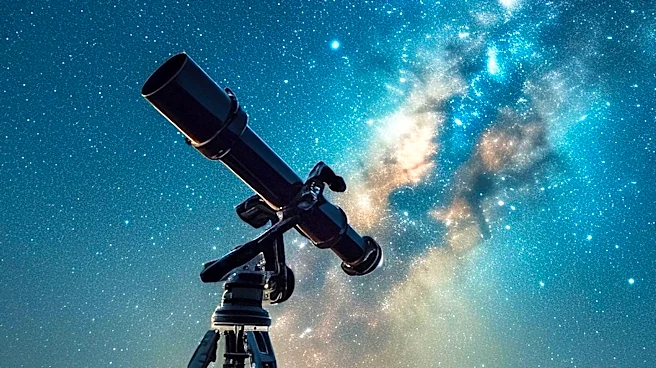
Astronomy.com has released its list of the best new astronomy products for November, featuring a selection of gear designed to enhance stargazing and astrophotography experiences. The highlighted products include the GS-100AR/AC High-Precision Guide Scope
from ToupTek, which functions as a guide scope, wide-field imaging system, and visual instrument, boasting an apochromatic design for flat images and reduced purple fringing. Another notable item is 'The Astrophotographer’s Universe,' a 728-page hardcover encyclopedia by Charles Bracken, covering over 1,700 deep-sky imaging targets with an accompanying iOS app. Additionally, Celestron's SkyMaster Gemini 2x40 Binoculars are featured for their wide 24-degree field of view and modest 2x magnification, ideal for observing constellations, meteor showers, and comets, with a compact, tripod-adaptable design.
Why It's Important?
The introduction of these new astronomy products is significant for the amateur astronomy community and the broader scientific and educational sectors. Innovations like ToupTek's guide scope can improve the precision and quality of astrophotography, making advanced techniques more accessible to enthusiasts. Charles Bracken's comprehensive encyclopedia serves as a valuable educational resource, deepening understanding of celestial objects and inspiring further exploration. Celestron's binoculars cater to a wider audience, offering an accessible entry point into stargazing and encouraging public engagement with science. These products collectively support the growth of astronomy as a hobby and contribute to scientific literacy, potentially fostering future generations of scientists and engineers. The advancements also drive competition and innovation within the optical and imaging technology industries.
What's Next?
As these new products become available, consumers will likely provide feedback that could influence future product development and upgrades. The integration of digital tools, such as the iOS app accompanying 'The Astrophotographer’s Universe,' suggests a continuing trend towards combining physical equipment with software for enhanced user experience. Manufacturers like ToupTek and Celestron will likely continue to innovate, focusing on improved optics, user-friendly designs, and advanced features to meet the evolving demands of the astronomy community. Educational institutions and astronomy clubs may also incorporate these tools into their programs, further expanding their reach and impact.
Beyond the Headlines
The continuous development of accessible and high-quality astronomy products has broader implications for scientific engagement and public understanding of the universe. By making advanced tools more affordable and easier to use, these innovations democratize access to scientific exploration, allowing more individuals to participate in observing and documenting celestial phenomena. This can foster a sense of wonder and curiosity about space, potentially leading to increased support for space research and STEM education. Furthermore, the blend of traditional observation tools with modern digital applications reflects a growing synergy between physical sciences and technology, pushing the boundaries of how we interact with and learn about the cosmos.