






What's Happening?
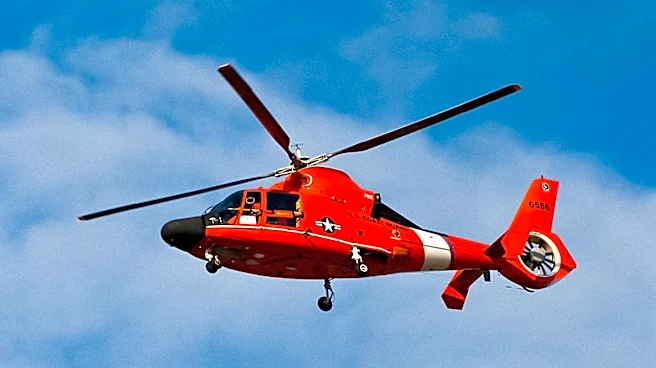
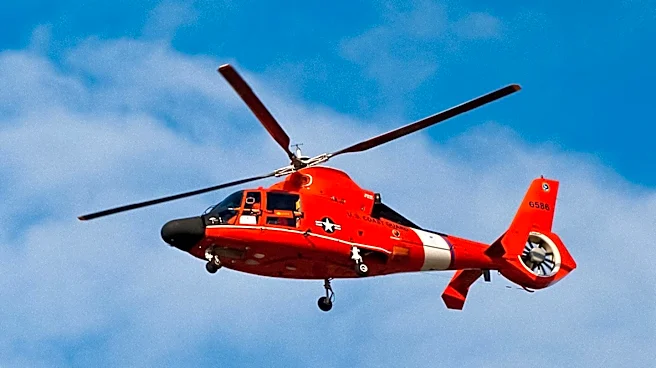
On November 4, 2026, the U.S. Coast Guard airlifted a 71-year-old male passenger from a cruise ship approximately 76 miles southeast of Charleston, South Carolina. The man had reportedly suffered a head injury, prompting a medevac request. An MH-65 Dolphin
helicopter crew from Coast Guard Air Station Savannah responded to the incident. The crew hoisted the injured passenger from the cruise ship and transported him to the Medical University of South Carolina. Upon arrival at the hospital, the man was reported to be in stable condition. While the U.S. Coast Guard did not officially identify the cruise ship involved, evidence from ship tracking data and video footage suggests the vessel was AIDA Cruises’ AIDAdiva. This incident occurred just days after another medical airlift operation off the Carolinas involving a passenger from the Norwegian Bliss.
Why It's Important?
This event highlights the critical role of the U.S. Coast Guard in providing emergency medical assistance to individuals at sea, particularly in situations where onboard medical facilities are insufficient. The rapid response and successful airlift demonstrate the effectiveness of inter-agency coordination and specialized rescue operations in safeguarding the well-being of cruise passengers in U.S. waters. Such incidents underscore the inherent risks associated with maritime travel, even on large cruise vessels, and the necessity for robust emergency protocols. For the cruise industry, these events serve as a reminder of the importance of comprehensive medical preparedness and the reliance on external emergency services for severe cases. The stable condition of the patient post-airlift also reflects positively on the efficiency of the rescue and subsequent medical care.
What's Next?
Following the successful airlift, the 71-year-old passenger will continue to receive treatment at the Medical University of South Carolina for his head injury. The U.S. Coast Guard has concluded its immediate rescue operation. AIDA Cruises has not publicly commented on the incident or any potential impact on the passenger's voyage. The AIDAdiva, which was on a 20-night Caribbean voyage, continued its itinerary, making scheduled stops in Port Canaveral and Miami, and is currently en route to Grand Turk. While the specific circumstances leading to the passenger's injury were not disclosed, cruise lines typically conduct internal reviews of such incidents to assess safety protocols and identify any areas for improvement. No further official statements are expected regarding the passenger's identity or the details of his injury.
Beyond the Headlines
The frequent occurrence of medical airlifts from cruise ships, as evidenced by this incident and the recent one involving the Norwegian Bliss, points to a broader challenge within the cruise industry regarding onboard medical capabilities for severe emergencies. While cruise ships are equipped with medical centers, they often lack the advanced facilities and specialized personnel found in land-based hospitals. This reliance on external services like the U.S. Coast Guard for critical care raises questions about the adequacy of current medical provisions on long voyages and the potential financial implications for both passengers and rescue agencies. Furthermore, the undisclosed nature of the injury's cause in this case highlights the limited transparency often surrounding such incidents, which can make it difficult to assess patterns or implement preventative measures across the industry.