
What's Happening?
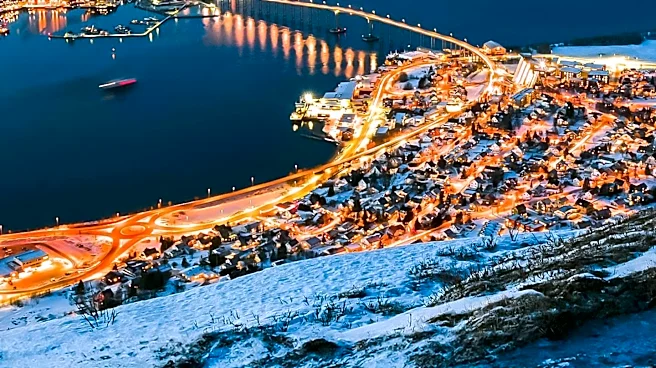
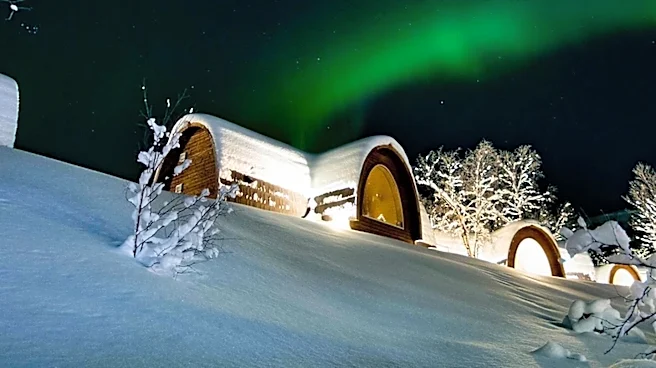
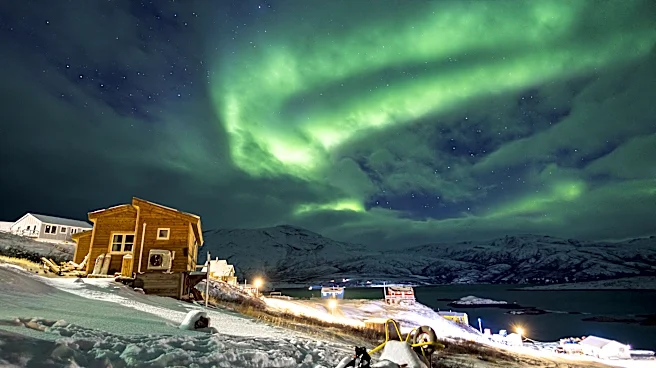
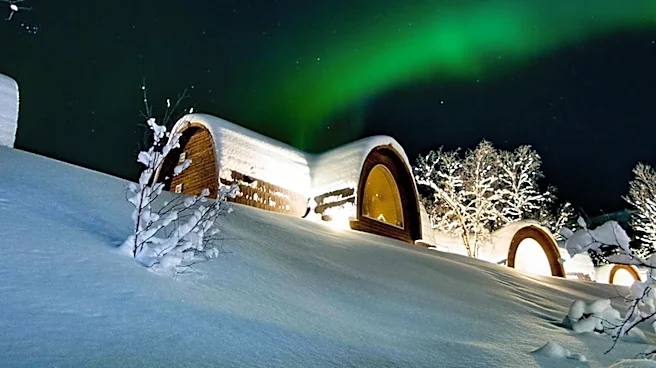
Tromsø, Norway, located at approximately 69 degrees north, provides a distinctive opportunity to view the Northern Lights, or aurora borealis, even during what would typically be considered daylight hours.
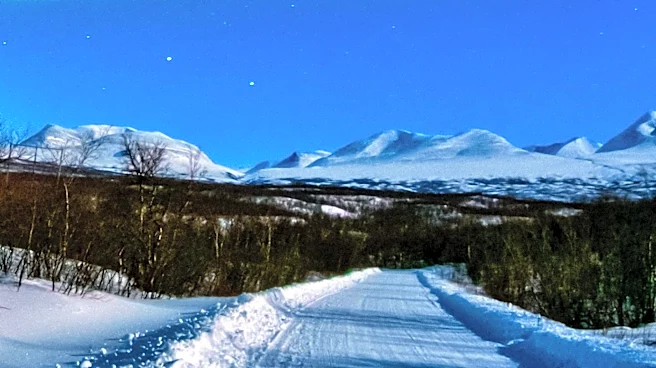
This is due to the phenomenon of polar night, which occurs from late November to mid-January, when the sun remains below the horizon. While not absolute darkness, midday in Tromsø during this period brings several hours of blue twilight, which is sufficient for strong aurora displays to be visible. Weaker displays might be washed out, but the hours around 9 a.m. and 3 p.m. are dark enough for ordinary sightings. The city's accessibility, with direct flights from Oslo and daily coastal ship calls, along with its developed tourism infrastructure including hotels, restaurants, and numerous tour operators, makes it a prime location for aurora tourism. Tromsø is also a research hub, home to UiT The Arctic University of Norway and the Tromsø Geophysical Observatory, which contributes to the understanding of the aurora.
Why It's Important?
The unique viewing conditions in Tromsø during polar night offer a significant advantage for aurora enthusiasts and the tourism industry. Unlike other locations where aurora viewing is strictly limited to nighttime, Tromsø's extended period of twilight allows for more flexible viewing schedules, potentially increasing tourist engagement and economic activity during the winter months. The city's robust infrastructure and scientific presence further enhance its appeal, providing both practical support for visitors and a deeper understanding of the natural phenomenon. This approach to aurora tourism differentiates Tromsø from more remote or less developed Arctic locations, making it a more accessible and comfortable option for a wider range of travelers. The ability to see the Northern Lights during what is technically 'daylight' hours challenges conventional understanding of aurora viewing and highlights the unique geographical conditions of high-latitude regions.
What's Next?
As the polar night season approaches, Tromsø is expected to continue attracting a significant number of tourists seeking to experience the Northern Lights. Tour operators will likely continue to offer a variety of experiences, including dog-sledding, snowshoeing, and fjord cruises, all scheduled to maximize aurora viewing opportunities during the extended twilight hours. The scientific community in Tromsø, through institutions like the Tromsø Geophysical Observatory and the Science Centre of Northern Norway, will likely continue its research and educational efforts related to the aurora, potentially enhancing the visitor experience with scientific insights. The city's established infrastructure and reputation as a prime aurora viewing destination are expected to maintain its status as a leading choice for those interested in witnessing this natural light show.
Beyond the Headlines
The phenomenon of polar night in Tromsø, which enables 'daylight' aurora viewing, underscores the profound impact of Earth's axial tilt on high-latitude regions. This geographical reality not only creates unique opportunities for tourism but also influences the daily lives and cultural practices of communities in these areas. The extended periods of darkness during winter can have psychological and physiological effects on residents, while also fostering unique adaptations and traditions. The scientific research conducted in Tromsø on the aurora borealis contributes to a broader understanding of space weather and its interactions with Earth's magnetic field, which has implications beyond tourism, including potential impacts on communication systems and power grids. The interplay between natural phenomena, scientific inquiry, and human adaptation in such extreme environments offers a rich area for further exploration.