

What's Happening?
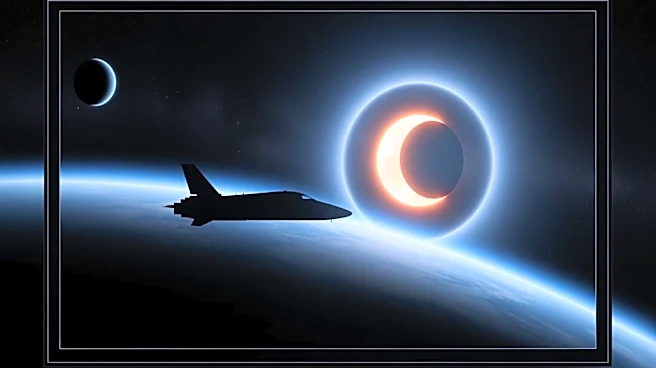
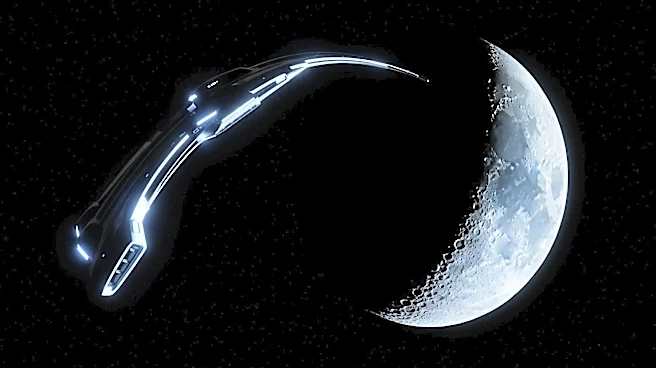
NASA's Artemis II mission crew experienced a total solar eclipse from space, a spectacle no human has ever seen before. The eclipse occurred as the moon completely blocked the sun's disk for nearly an hour, providing the astronauts with a unique view
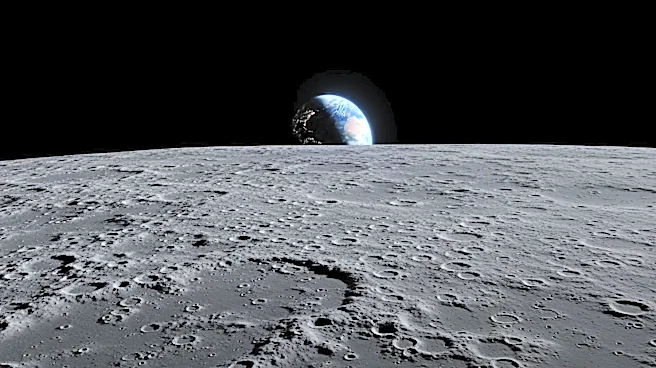
from the Orion spacecraft. During this period, the crew observed earthshine, the faint light reflected off Earth onto the lunar surface, and turned their cameras towards Venus, Mars, Saturn, and Mercury. The eclipse lasted 57 minutes, significantly longer than terrestrial eclipses, which typically last only a few minutes. The crew, consisting of NASA astronauts Reid Wiseman, Victor Glover, Christina Koch, and Canadian Space Agency astronaut Jeremy Hansen, conducted scientific observations of the moon and searched for lunar dust and zodiacal light during the event.
Why It's Important?
This event marks a significant milestone in space exploration, providing insights into celestial phenomena from a vantage point never before experienced by humans. The observations made by the Artemis II crew could enhance understanding of the sun's magnetic field and lunar dust, which is crucial for future lunar exploration. The ability to witness and study such events from space can lead to advancements in space science and technology, potentially benefiting future missions and scientific research. The unique observations made during the eclipse could contribute to the development of strategies for dealing with lunar dust, a known hazard for both humans and machinery on the moon.
What's Next?
Following the eclipse, the Artemis II crew will continue their mission, focusing on further scientific observations and experiments. The data collected during the eclipse will be analyzed to gain deeper insights into solar and lunar phenomena. NASA may use these findings to inform future missions, particularly those involving lunar exploration. The success of this mission could pave the way for more ambitious space endeavors, including potential manned missions to Mars and beyond.
Beyond the Headlines
The Artemis II mission highlights the importance of international collaboration in space exploration, with Canadian astronaut Jeremy Hansen being part of the crew. This cooperation could lead to more joint missions and shared scientific discoveries, fostering global partnerships in space research. Additionally, the mission underscores the role of space exploration in inspiring public interest and support for scientific endeavors, potentially influencing educational and policy decisions related to space and science.