






What's Happening?
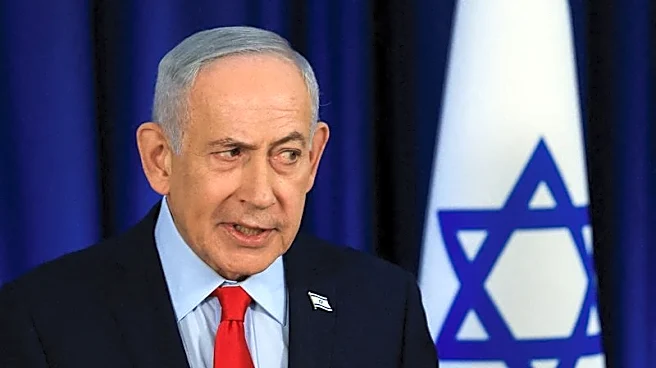
Israel is currently engaged in a complex military operation, targeting Hamas in Gaza and managing tensions with Hezbollah in Lebanon. The recent assassination of Mohammed Odeh, a key Hamas leader, marks a significant development in Israel's strategy to
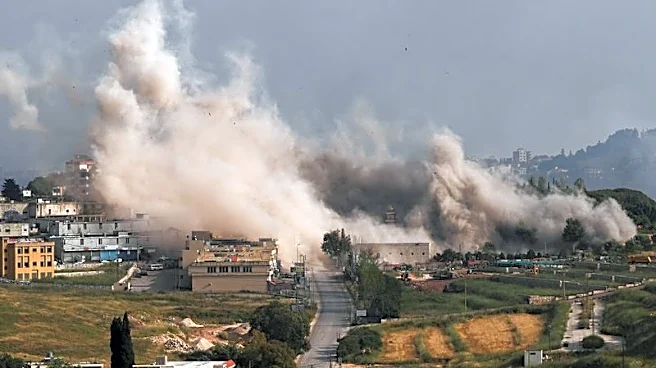
weaken the organization. This operation follows the elimination of another Hamas leader, Ezzedine al-Haddad, two weeks prior. Concurrently, Israel is addressing threats from Hezbollah, which continues to pose a challenge despite suffering losses. The Israeli Defense Forces (IDF) are navigating these dual fronts, aiming to maintain security while facing questions about the long-term strategic outcomes.
Why It's Important?
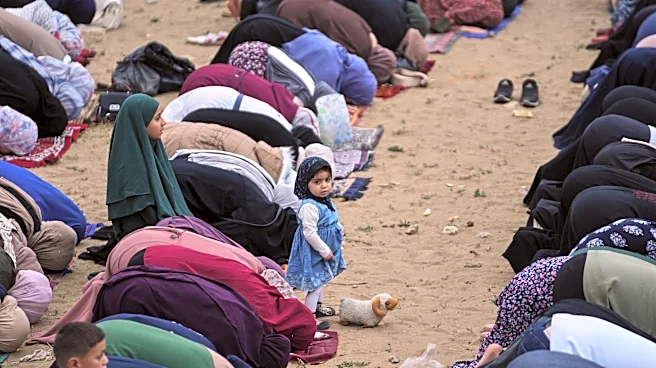
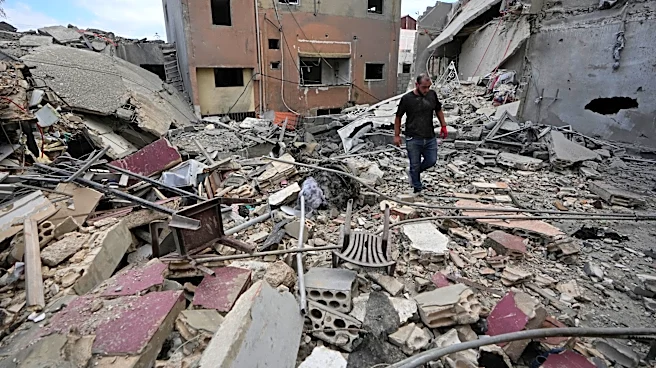
The dual-front conflict underscores the ongoing security challenges Israel faces in the region. The operations against Hamas and Hezbollah are critical to Israel's national security strategy, aiming to neutralize threats and prevent future attacks. However, these actions also highlight the complexities of regional politics, where military successes do not always translate into strategic victories. The situation affects not only military dynamics but also the humanitarian conditions in Gaza and southern Lebanon, where civilian populations are caught in the crossfire. The international community is likely to monitor these developments closely, considering their implications for regional stability.
What's Next?
Israel's military strategy will likely continue to focus on targeted operations against key figures in Hamas and Hezbollah. The IDF may increase its presence in strategic areas to prevent further escalations. Meanwhile, diplomatic efforts may intensify as international actors seek to mediate and prevent a broader conflict. The humanitarian situation in affected areas will remain a concern, with potential calls for increased aid and support for civilians. The outcome of these operations could influence future peace negotiations and the geopolitical landscape in the Middle East.