



What's Happening?
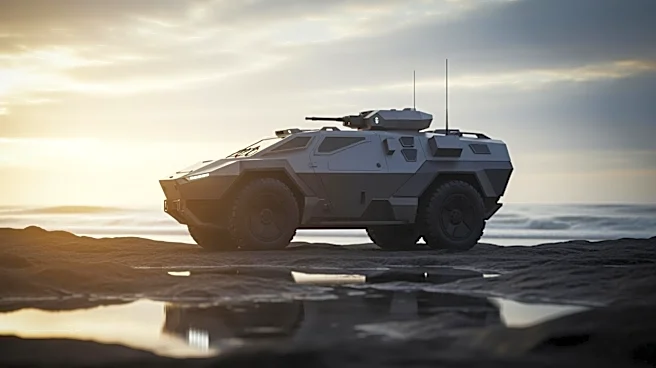
Textron has announced the completion of its build and evaluation period for its 30mm prototype, part of the Cottonmouth Advanced Reconnaissance Vehicle (ARV) family. This development is part of a $450 million pre-production agreement with the Marine Corps.
Textron is set to deliver 16 'production representative' systems across three variants: six 30mm versions, six command, control, communications, computer, unmanned aerial system (C4/UAS) platforms, and four logistics models. These systems will undergo extensive testing as part of the Marine Corps' efforts to replace the aging Light Armored Vehicle (LAV) with a more advanced, tech-focused platform. Textron has already established its production line in preparation for full-rate output, demonstrating its readiness to meet the Marine Corps' requirements.
Why It's Important?
The development of the Advanced Reconnaissance Vehicle (ARV) is crucial for the Marine Corps as it seeks to modernize its reconnaissance capabilities. The ARV is designed to be modular and maneuverable, capable of operating in diverse environments, which is essential for the Marine Corps' evolving operational needs. The competition between Textron and General Dynamics Land Systems (GDLS) highlights the high stakes involved, with billions of dollars on the line. The ARV program is part of the Marine Corps' broader Force Design restructuring, aimed at enhancing its capabilities in a complex and information-rich battlefield. The successful implementation of the ARV could significantly enhance the Marine Corps' operational effectiveness and adaptability.
What's Next?
Textron is expected to deliver the 16 production representative systems for testing, which will be a critical phase in determining the final selection for the ARV program. The Marine Corps will evaluate these systems to ensure they meet the required specifications and performance standards. The outcome of this testing phase will influence the final decision on which company will secure the full production contract. Both Textron and GDLS will continue to refine their prototypes and demonstrate their capabilities to secure the contract. The Marine Corps' decision will have long-term implications for its reconnaissance capabilities and operational strategy.