








What's Happening?
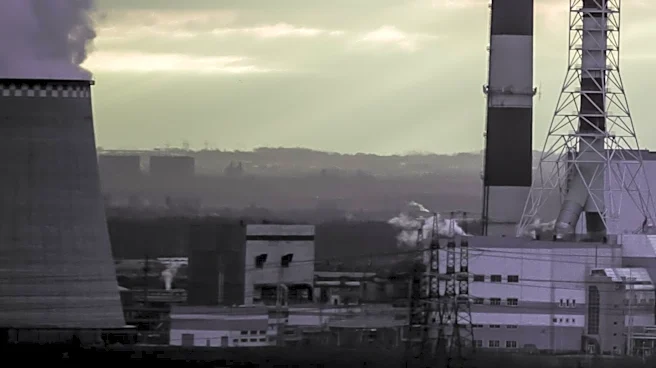
A new report by Just Transition Northwest Indiana (JTNWI) highlights the significant environmental and health impacts of industrial pollution in Northwest Indiana. The study, titled 'Measuring Legacy Pollution’s Burden on Northwest Indiana,' was presented
by Lisa Vallee and Nicholas Muller, a professor at Carnegie Mellon University. It examines the effects of 20 industrial facilities on air quality and public health, revealing that pollution causes over $3 billion in damages annually. The report attributes the largest share of damage to Cleveland-Cliffs’ Burns Harbor steel facility, which accounts for 53% of the total damages. The study uses data from the U.S. Environmental Protection Agency and demographic information to assess the impact on different communities. Cleveland-Cliffs and U.S. Steel have responded to the findings, emphasizing their economic contributions and efforts to modernize operations.
Why It's Important?
The report underscores the urgent need for sustainable industrial practices in a region heavily reliant on steel production. The findings highlight the economic and health costs of pollution, which amount to a significant portion of local GDP. This raises questions about the long-term viability of current production methods. The responses from Cleveland-Cliffs and U.S. Steel reflect the tension between economic interests and environmental sustainability. The report could influence policy discussions and regulatory actions aimed at reducing pollution while maintaining economic stability. It also emphasizes the importance of balancing industrial activity with environmental health, a challenge faced by many industrial regions in the U.S.
What's Next?
The report's findings are likely to fuel ongoing debates about industrial regulation and environmental policy in Indiana. Stakeholders, including local governments, environmental groups, and industry leaders, may engage in discussions to find a balance between economic growth and environmental protection. The data could be used to advocate for stricter regulations and investment in cleaner technologies. The responses from companies like Cleveland-Cliffs and U.S. Steel suggest potential resistance to changes that could impact their operations. However, the report may also encourage these companies to accelerate their efforts to adopt greener technologies and reduce emissions.