






What's Happening?
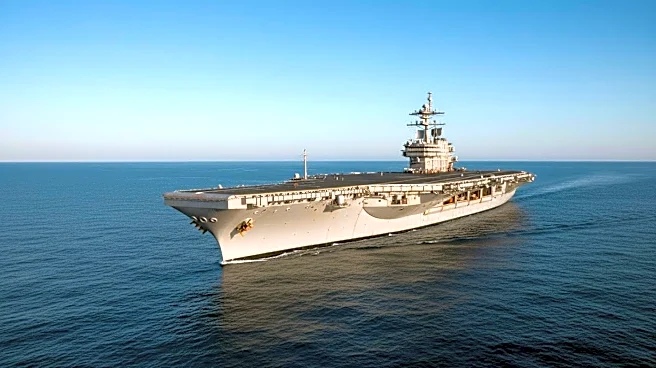
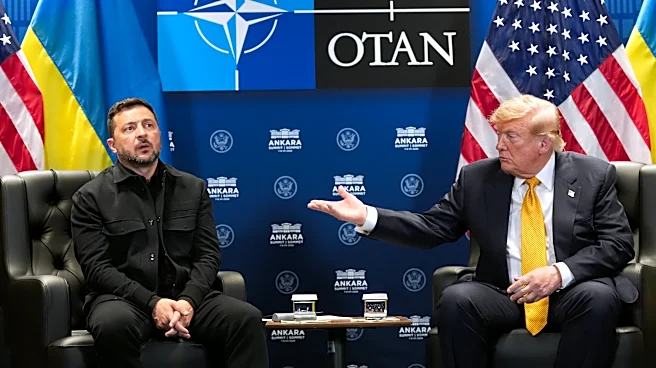
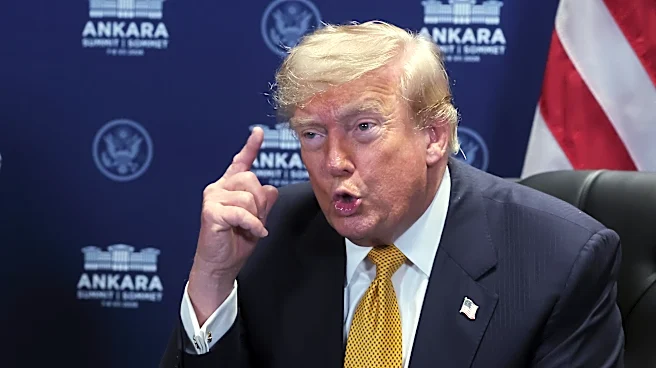
President Donald Trump made an erroneous statement claiming that the 'Islamic Republic of Japan' fired 111 missiles at a U.S. aircraft carrier, the USS Abraham Lincoln, a few months ago. This statement was made during a press event with Ukrainian President Volodymyr
Zelenskyy at the NATO summit in Ankara, Turkey. Trump described the USS Abraham Lincoln as one of the most beautiful and largest aircraft carriers in the world. He claimed that the missiles were launched over the course of an hour and were all intercepted. The incident he referred to is not supported by any known facts, as Japan is a longstanding ally of the United States and not an Islamic republic. The U.S. and Japan have maintained a military alliance for nearly 75 years, with a mutual defense agreement and approximately 60,000 U.S. troops stationed in Japan.
Why It's Important?
The statement by President Trump highlights the potential for misinformation at high levels of government, which can have significant diplomatic repercussions. Such inaccuracies can strain international relations, especially with key allies like Japan. The U.S.-Japan alliance is crucial for maintaining stability in the Asia-Pacific region, and any perceived misunderstanding or miscommunication could lead to diplomatic tensions. Furthermore, the statement could impact public perception and trust in the administration's handling of foreign policy. It underscores the importance of accurate communication from government officials, particularly in matters involving international security and alliances.
What's Next?
It is likely that the U.S. administration will need to clarify President Trump's statement to prevent any diplomatic fallout with Japan. This may involve official communications from the State Department or the White House to reaffirm the strong ties between the U.S. and Japan. Additionally, there may be discussions within the administration to ensure more accurate briefings and statements in the future. The incident could also prompt media scrutiny and public discussion about the administration's foreign policy approach and communication strategies.
Beyond the Headlines
This incident raises questions about the accuracy of information being relayed to the public by high-ranking officials. It also highlights the potential consequences of misinformation in international relations, where misunderstandings can escalate into larger conflicts. The role of media in fact-checking and holding officials accountable becomes crucial in such scenarios. Moreover, it reflects on the broader challenges of maintaining diplomatic relations in a complex global landscape, where alliances and partnerships are vital for geopolitical stability.