



What's Happening?
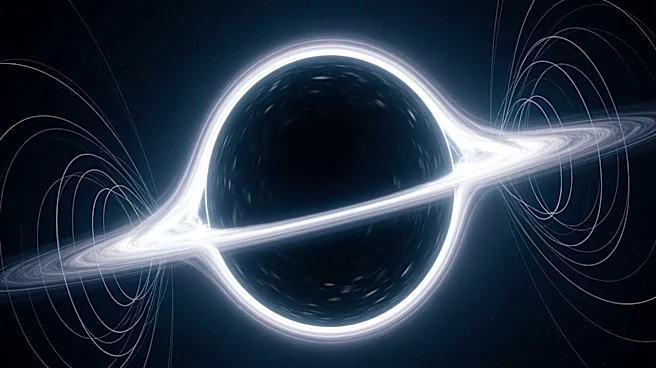
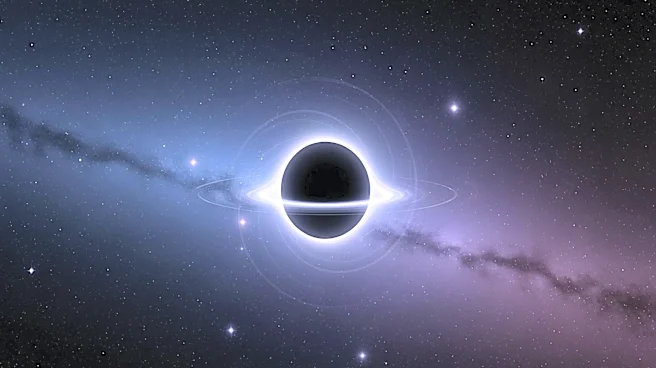
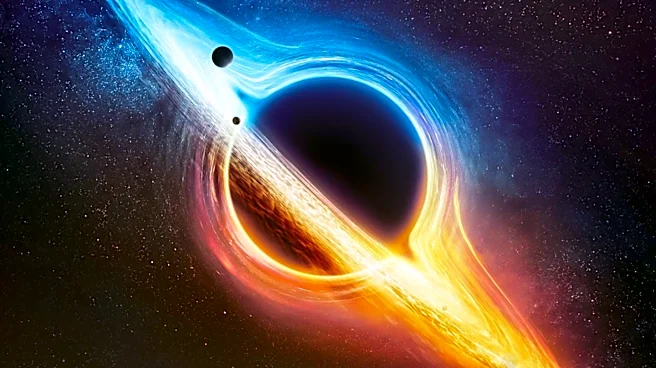
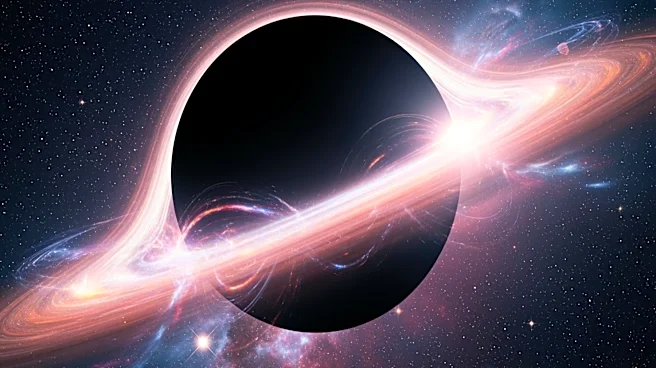
Researchers from MIT, led by Ore Gottlieb, have been investigating the potential role of primordial black holes (PBH) as components of dark matter. These hypothetical black holes are believed to have formed in the early universe without stellar progenitors,
through the direct collapse of densely-packed subatomic matter. The study explores the possibility of PBHs being captured by stars, leading to two potential outcomes: a quiet consumption of the star or an explosive ejection, leaving behind a rapidly spinning, low-mass black hole. The research aims to understand the mass range of PBHs, which could span from asteroid size to lunar size, and their contribution to dark matter.
Why It's Important?
The study of primordial black holes as dark matter candidates is significant because it could provide insights into the composition of dark matter, a major unsolved mystery in astrophysics. If PBHs are indeed a component of dark matter, their interactions with stars could offer observable phenomena, such as gravitational waves or electromagnetic signatures, that could be detected with current technology. This research could potentially reshape our understanding of the universe's structure and the role of dark matter in galaxy formation and evolution.
What's Next?
Future research will likely focus on detecting gravitational waves or electromagnetic signals from stars that have captured PBHs. These observations could confirm the existence of PBHs and their role in dark matter. Additionally, further studies may explore the environments and conditions under which PBHs are captured by stars, providing a clearer picture of their distribution and impact on galactic dynamics.