




What's Happening?
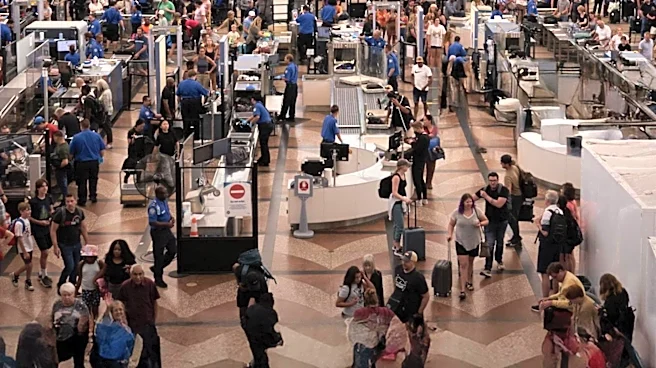
Hartsfield-Jackson Atlanta International Airport, the world's busiest airport, will continue to utilize its federal Transportation Security Administration (TSA) workforce for security screening. A city-commissioned study, conducted by Ricondo & Associates
for Atlanta's Department of Aviation, recommended against replacing TSA officers with private security screeners under the TSA's Screening Partnership Program (SPP). The study concluded that there was no compelling need to adopt the SPP model, citing that private screening would not save money, as contractors must be paid comparably to TSA officers, and would not resolve issues related to government shutdowns, as contractors are still paid through the TSA. Furthermore, the study warned of operational risks associated with transitioning approximately 1,300 TSA employees to contractors, a program never before implemented at an airport of Atlanta's scale. Mayor Andre Dickens agreed with the recommendation.
Why It's Important?
This decision by Hartsfield-Jackson Atlanta International Airport has significant implications for airport security, labor practices, and federal-local government relations. By retaining the federal TSA workforce, Atlanta avoids potential operational disruptions and maintains a consistent security standard under federal oversight. The study's findings challenge the notion that privatizing security screening automatically leads to cost savings or improved efficiency, especially in large-scale operations. This outcome also highlights the vulnerability of airport operations to federal government shutdowns, as the initial consideration for private screening arose from major delays caused by TSA officer callouts during such events. The decision underscores the complex interplay between national security mandates and local operational realities at critical infrastructure points.
What's Next?
For the foreseeable future, travelers passing through Hartsfield-Jackson Atlanta International Airport will continue to encounter federal TSA officers at security checkpoints. Atlanta City Councilman Byron Amos, who initially introduced the legislation for the feasibility study, has accepted the findings and is now calling on Congress to address the underlying issues that impact TSA workers, particularly during government shutdowns. This suggests a shift in focus from local privatization efforts to advocating for federal policy changes that ensure fair treatment and stable working conditions for TSA employees. The airport's decision may also influence other major U.S. airports considering similar transitions, reinforcing the perceived benefits of maintaining a federal security presence.
Beyond the Headlines
The debate over privatizing airport security screening touches upon fundamental questions of national security, labor rights, and the role of government versus private enterprise in critical public services. While the SPP exists and is utilized by smaller airports, the Atlanta study's conclusion for a major hub like Hartsfield-Jackson suggests that the complexities and scale of operations may make privatization less viable or beneficial. This decision could reinforce the argument for maintaining federal control over airport security, emphasizing the importance of a unified national standard and direct accountability. It also brings to light the broader issue of how federal employees, particularly those in essential services, are impacted by political impasses and government shutdowns, prompting calls for more stable and equitable solutions from Congress.