



What's Happening?
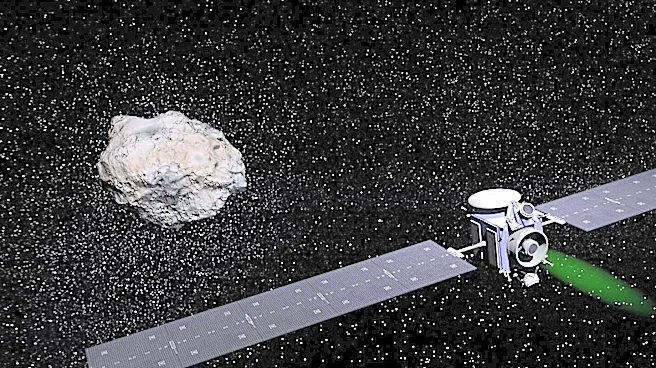
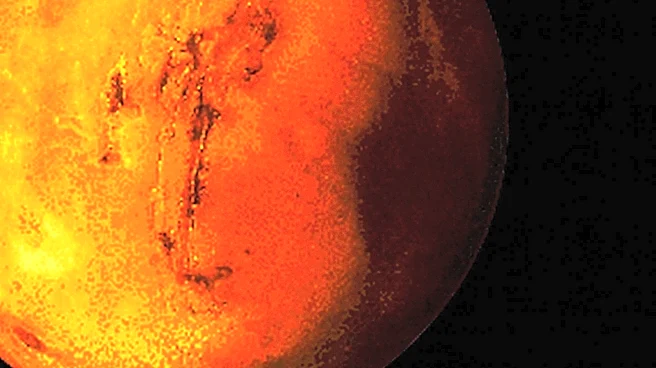
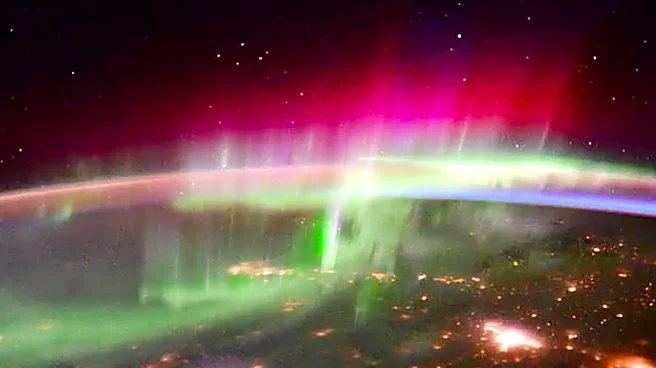
A study published in Nature Communications reveals that Mars' auroras operate on the same physics as Earth's Northern Lights, known as the Dungey cycle. This discovery was made using data from NASA's MAVEN spacecraft, which found that Mars' localized
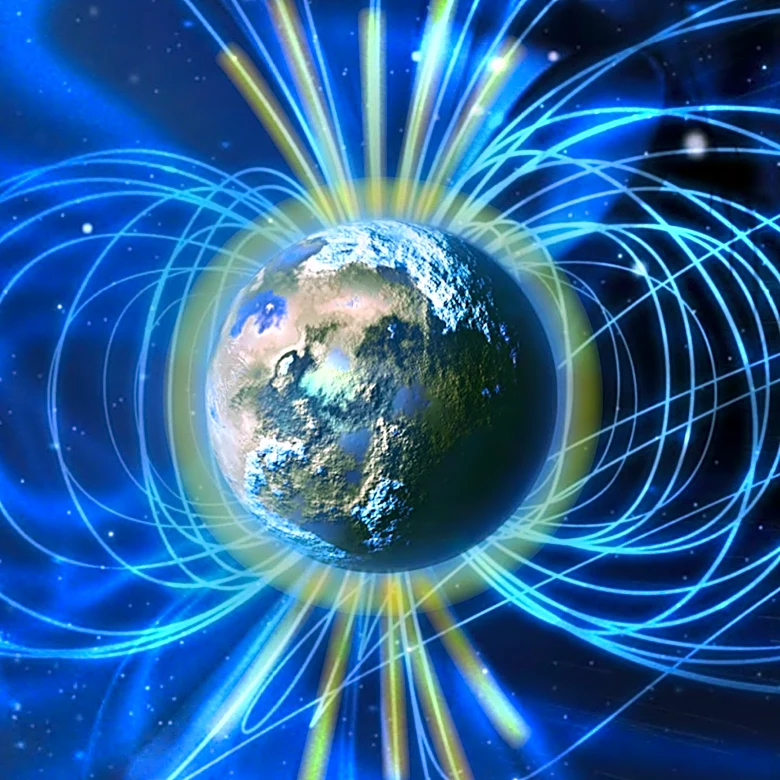
auroras are powered by magnetic reconnection above ancient magnetized rock patches. This finding challenges the previous assumption that a planet-wide magnetic field is necessary for such auroras. The study highlights the differences between Earth's global magnetosphere and Mars' localized magnetic patches, which still allow for similar auroral processes.
Why It's Important?
This discovery is significant as it expands the understanding of magnetic fields and auroras beyond Earth, suggesting that similar processes could occur on other planets without global magnetic fields. It provides insights into Mars' atmospheric history and its evolution, which is crucial for understanding planetary environments and potential habitability. The findings could influence future missions to Mars and other celestial bodies, as they offer a new perspective on how magnetic fields interact with solar winds.
What's Next?
Following the conclusion of the MAVEN mission, NASA's ESCAPADE mission is set to continue exploring Mars' magnetosphere. Scheduled to arrive at Mars in 2027, the twin smallsat orbiters will provide simultaneous measurements from different locations, offering a more comprehensive understanding of Mars' magnetic environment. This ongoing research will contribute to space weather forecasting, essential for future crewed missions to Mars.